



Introduction
Premium microporous protective coverall designed for superior comfort and reliable protection. Features reinforced blue tape seams for enhanced durability and visible quality assurance. Ideal for healthcare, laboratory, industrial, and contamination control environments.
Product Description
This disposable coverall combines soft, breathable microporous material with strategically placed blue tapes on all seams for reinforced protection. The latex-free, fiberglass-free construction ensures comfort during extended wear while maintaining effective barrier performance. Available in multiple configurations to meet diverse industry requirements.

Specifications
Core Specifications
|
Parameter |
Standard Specification |
|
Material |
Microporous (soft, breathable, latex-free, no glass fibers) |
|
Standard Sizes |
S, M, L, XL, 2XL, 3XL, 4XL, 5XL |
|
Reference Dimensions |
XL: 173cm × 136cm (height × width) |
|
Weight |
50-65 gsm |
|
Color |
White body with blue reinforcement tapes |
|
Seam Construction |
Sewn then bonded with blue tape coverage |
|
Sterility Options |
Non-sterile or Sterile |
Customizable Range
Sizes: Custom dimensions beyond standard range
Weight: 45-75 gsm available upon request
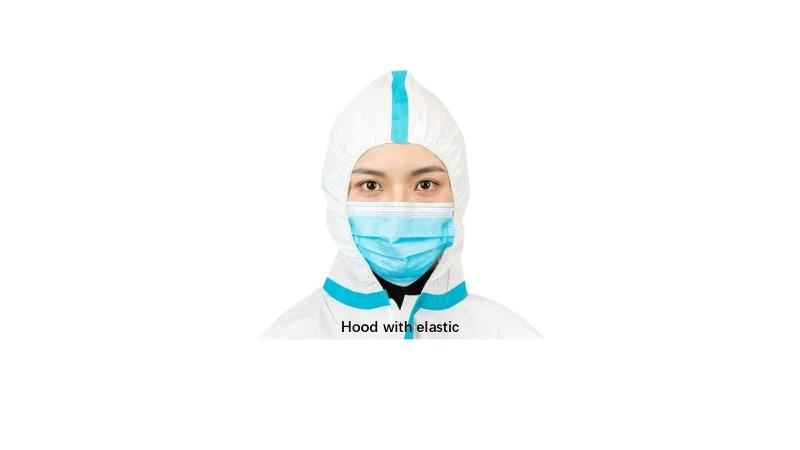
Hood: Standard elastic or custom fit options
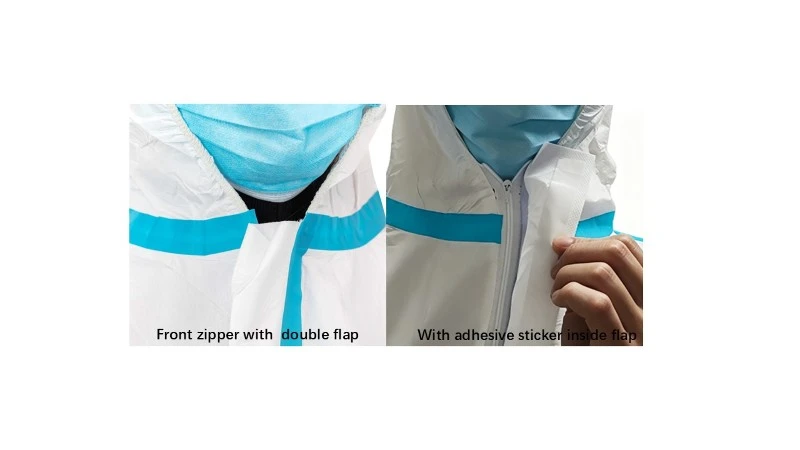
Front Closure:
Single or double storm flap
With/without adhesive sticker inside flap
Waist: With/without elastic support

Cuffs: Elastic or knitted finish

Ankles:
Elastic closure
With/without integrated shoe covers

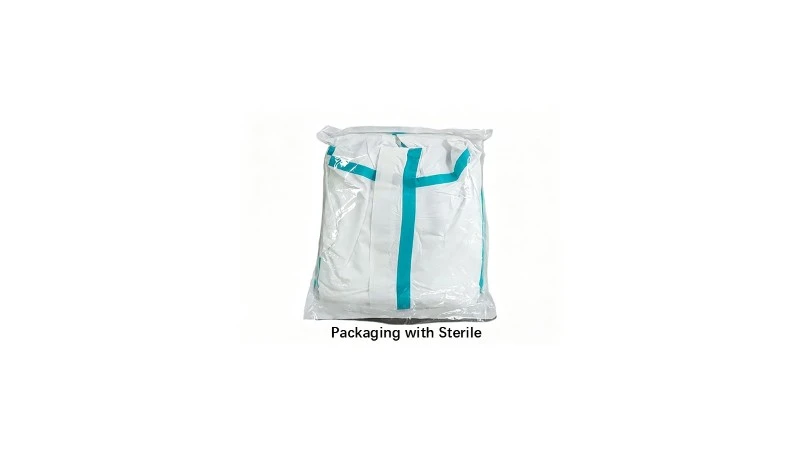
Packaging: Custom quantity per bag/carton,Sterile or non-sterile
Branding: Private labeling and logo printing available
Product Advantages
Differentiating Features
1. Blue Tape Reinforcement System
Visual quality indicator for instant seam integrity verification
Enhanced tear resistance at critical stress points
Reduces contamination risk at seam junctions
2. Premium Microporous Material
Superior breathability vs. standard SMS/PP materials
Softer hand feel reduces wearer fatigue
Maintains protective barrier while improving comfort
3. Flexible Design Options
Multiple closure and elastic configurations in one product line
Accommodates diverse workplace requirements without SKU proliferation
Quick customization for bulk orders
4. Allergen-Free Construction
Completely latex-free formulation
No glass fiber irritants
Suitable for sensitive skin environments

Available Styles
|
Style Code |
Configuration |
|
Type A |
Hood with elastic + Single flap zipper + Elastic cuffs + Elastic ankles |
|
Type B |
Hood with elastic + Double flap zipper with adhesive + Knitted cuffs + Elastic ankles with shoe covers |
|
Type C |
Hood with elastic + Single flap zipper + Waist elastic + Elastic cuffs + Elastic ankles |
|
Type D |
Hood with elastic + Double flap zipper with adhesive + Waist elastic + Knitted cuffs + Elastic ankles with shoe covers |
|
Custom |
Mix and match features based on specific requirements |
Frequently Asked Questions
Q: What protection level does this coverall provide?
A: Suitable for Type 5/6 protection applications (dust and limited liquid splash). Not for chemical or biological hazard protection.
Q: Can I wear this for extended periods?
A: Yes. The microporous material is designed for breathability, making it more comfortable than standard polypropylene coveralls for shifts up to 8 hours.
Q: What's the difference between sterile and non-sterile packaging?
A: Non-sterile is suitable for general industrial use. Sterile packaging (individually sealed) is required for surgical/medical environments with strict contamination protocols.
Q: Are the blue tapes just decorative?
A: No. They reinforce all seams, provide additional barrier protection, and serve as visual quality indicators for quick inspection.
Q: How do I choose between elastic and knitted cuffs?
A: Elastic cuffs provide tighter seals for higher protection. Knitted cuffs offer better comfort and dexterity for precision work.
Q: What's the shelf life?
A: Typically 5 years when stored in cool, dry conditions away from direct sunlight.
Q: Do you provide certification documentation?
A: Yes. FDA, CE, ISO certificates, test reports, and material safety data sheets are provided with bulk orders.
Information Required for Bulk Purchasers
Critical Order Details
1. Product Configuration
[ ] Size selection (standard or custom dimensions)
[ ] Material weight (50/55/60/65 gsm or custom)
[ ] Style type (A/B/C/D or custom configuration)
[ ] Hood, zipper, cuff, ankle, and waist specifications
2. Packaging Requirements
[ ] Sterile or non-sterile
[ ] Quantity per inner bag
[ ] Quantity per carton
[ ] Individual vs. bulk packaging
3. Compliance & Documentation
[ ] Required certifications (CE, FDA, ISO, etc.)
[ ] Destination country/region
[ ] Specific regulatory standards to meet
[ ] Test reports needed
4. Branding & Labeling
[ ] Private label requirements
[ ] Logo placement and printing specifications
[ ] Language requirements for labels/packaging
[ ] Barcode/SKU specifications
5. Order Logistics
[ ] Order quantity (MOQ typically 5,000-10,000 pieces)
[ ] Target delivery date
[ ] Shipping terms (FOB, CIF, DDP, etc.)
[ ] Quality inspection requirements
6. Samples
[ ] Sample types needed before bulk order
[ ] Quantity required for internal testing/approval
[ ] Timeline for sample evaluation
Contact us with the above details for accurate quotation and production timeline. Lead time typically 20-35 days depending on customization level and order volume.
Hot Tags: Disposable Protective Coverall with Blue Tapes, suppliers, manufacturers, price, bulk, for sale, in stock, Blue Disposable Coveralls, Disposable Coverall, , Breathable Disposable Coveralls, Disposable Hazmat Suit With Hood, EN14126 Coverall


