



Not All Cleaning Cloths Are Created Equal
Here is something most people find out the hard way.
You grab a cloth roll, wipe down a glass surface, and step back - only to find a trail of tiny fibers stuck to the surface and a smear that was not there before. Frustrating? Absolutely. Surprising? It should not be, because lint and streaks are almost always a sign of one thing: the wrong cloth for the job.
The good news is that once you understand what actually separates a quality cleaning cloth roll from a cheap one, you will never make the wrong choice again. And it is simpler than most suppliers want you to think.

Why Lint and Streaks Are More Than Just Annoying
Most people treat lint as a minor inconvenience. In reality, it is a performance failure - and depending on where you are working, it can be a serious one.
Think about it this way:
In a food service environment, a lint-free cleaning cloth is not optional - loose fibers on food prep surfaces are a direct hygiene risk
In a healthcare facility, fiber release during wiping can compromise sterile conditions
In a laboratory setting, a single stray fiber can invalidate a test result
In electronics manufacturing, fiber contamination on components causes real damage
In an automotive workshop, lint on a freshly polished surface means starting over
Streaks tell a different story. They happen when a cloth cannot absorb liquid properly - instead of pulling the liquid in, it just pushes it around. The result is a smear that dries into a visible line. On glass cleaning cloth tasks or stainless steel cleaning cloth jobs, that is simply unacceptable.
The bottom line? Lint shedding and streak formation are not cosmetic problems. They are performance problems with real consequences.
It All Starts With What the Cloth Is Made Of
You cannot fix a bad material with good manufacturing. The fiber choice is everything.
Spunlace Non-Woven Fabric
This is the gold standard for lint-free performance. The hydroentanglement process uses high-pressure water jets to lock cellulose fiber and synthetic fiber together at a microscopic level. The result is a non-shedding cleaning cloth that holds together even under heavy use. It is the go-to material for medical cleaning cloths, laboratory cleaning cloths, and anywhere that fiber release is simply not an option.

Viscose + Polyester Blend
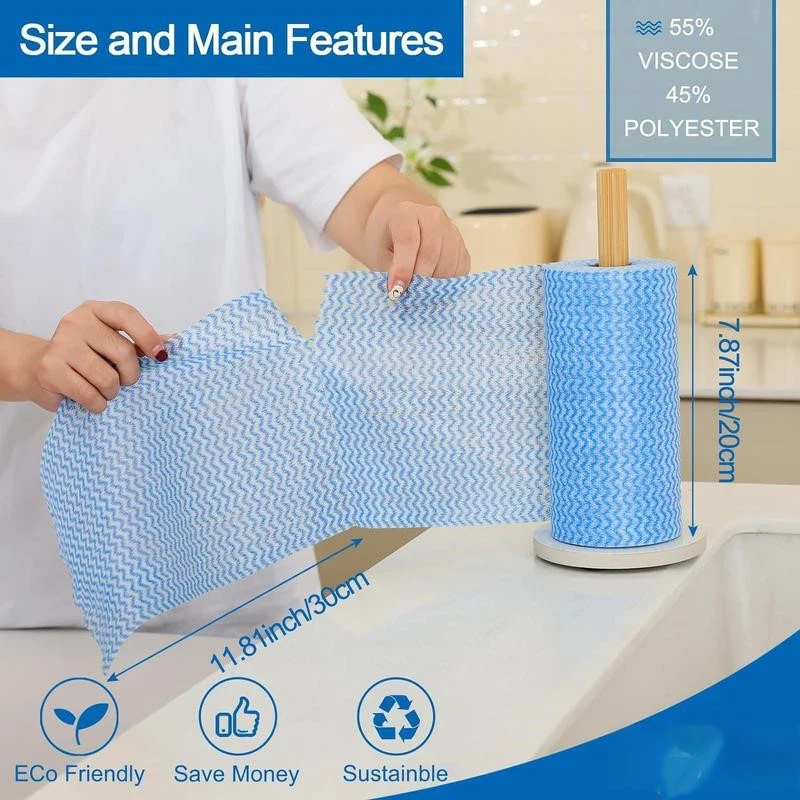
The viscose polyester blend cloth is probably the most versatile option on the market. Viscose fiber is naturally soft and pulls liquid in fast - giving you that high absorbency rate that prevents streaking. Polyester fiber adds the backbone - the tensile strength and wet strength that keeps the cloth from falling apart mid-task. Together, they make a durable disposable cloth that handles everything from kitchen spills to industrial wipe-downs without complaint.
Bamboo Fiber and Cellulose Options
If sustainability is a priority - and increasingly it is - bamboo fiber cleaning cloth and cellulose cleaning wipe formats are worth serious consideration. These natural fiber cleaning cloths are biodegradable, genuinely eco-friendly, and when made correctly, they perform right alongside synthetic options. The plant-based cleaning cloth category is growing fast, and the quality has caught up.
What to Steer Clear Of
Not every material belongs in a professional setting. Loosely woven fabrics shed constantly. Low-grade wood pulp fiber blends collapse when wet. Cheap synthetic fiber cleaning cloths look fine in the packaging and fall apart on the first real job. If the price seems too good to be true, the material probably is.
GSM: The Number That Actually Tells You What You Are Getting
GSM - grams per square meter - is the single most useful number on any cleaning cloth roll specification sheet. It tells you how dense, how heavy, and how capable the cloth is before you even touch it.
|
GSM Range |
What It Feels Like |
Where It Works Best |
|
30–50 GSM |
Light, almost paper-thin |
Dry wiping, light dusting |
|
50–80 GSM |
Balanced - not too thin, not too thick |
General office and household cleaning |
|
80–120 GSM |
Noticeably substantial, holds its shape |
Food service, healthcare, lab environments |
|
120–180 GSM |
Heavy, almost cloth-like |
Automotive, heavy industrial machinery |
Here is the practical reality: a cleaning cloth GSM that is too low will tear, streak, and shed. Too high for a delicate job, and you risk scratching the surface. Getting the GSM rating right is not complicated - it just requires knowing what the cloth is actually going to do.
Construction Quality: What You Feel Before You See
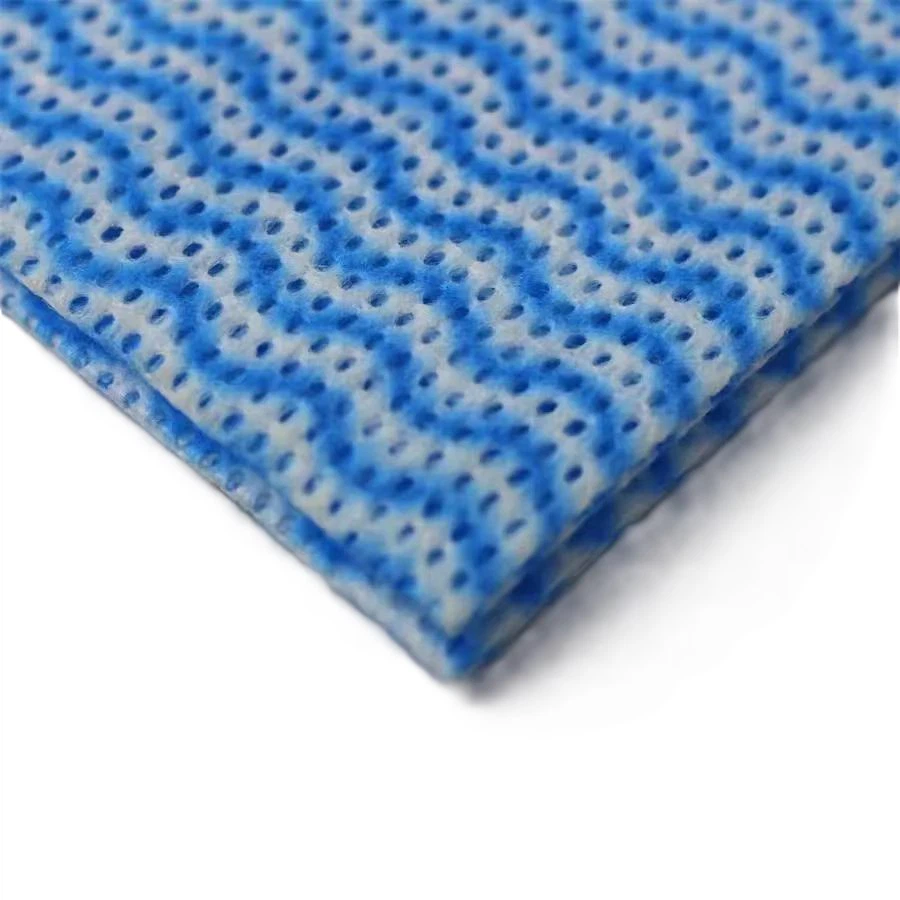
Good fibers poorly assembled still make a bad cloth. The way a disposable cleaning cloth roll is built determines how it performs under real conditions.
The hydroentanglement process produces cloths with very low lint shedding because the fibers are physically entangled - not glued. Chemical bonding, on the other hand, uses bonding agents that can break down with certain cleaning chemicals, releasing fibers and leaving residue on surfaces.
Beyond the bonding method, a few other construction details matter more than most buyers realize:
Perforation process quality - a clean, consistent perforation tears neatly every time. A poor one creates jagged edges that shed fibers immediately
Roll slitting precision - the edges of a cloth roll are where fiber release often starts. Imprecise roll slitting leaves rough edges that shed with every sheet pulled
Embossed cleaning cloth texture - surface embossing adds scrubbing power without increasing lint. A flat cloth and an embossed cleaning cloth can be made from identical materials and perform very differently
Thermal bonding - adds structural strength without the chemical residue risk
These are the details that separate a cloth that works from one that looks like it should work.
Absorbency Is the Real Secret Behind Streak-Free Results
Here is something worth understanding clearly: streak-free performance is not really about the surface. It is about the cloth's ability to actually pull liquid away from the surface rather than redistribute it.
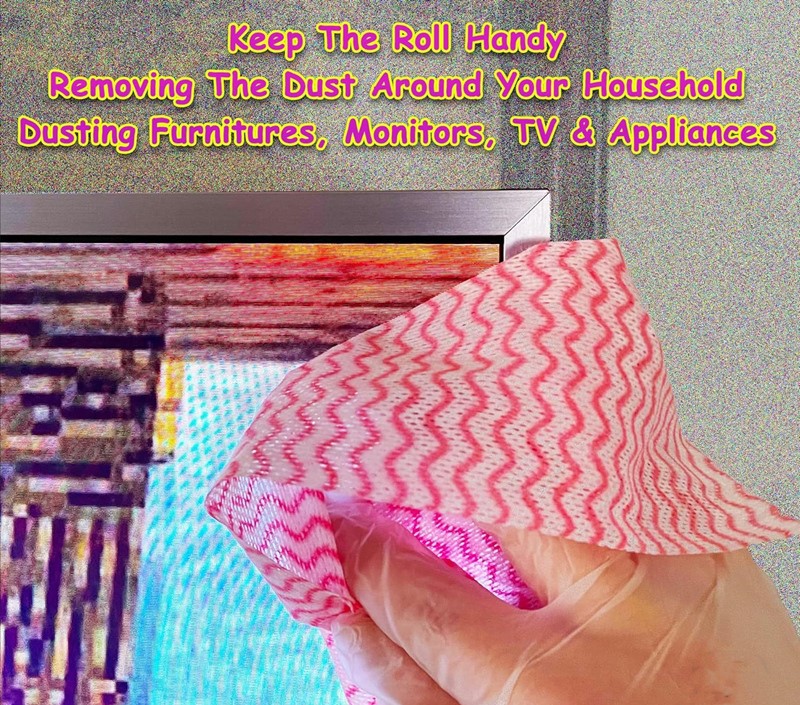
A quality spunlace non-woven fabric cloth absorbs up to 6 times its own weight in liquid. That means the liquid goes into the cloth - not back onto the surface in a smear. Viscose fiber is one of the most absorbent materials available in this category, which is a big part of why the viscose polyester blend cloth is so widely used.
A low absorbency rate is almost always the reason a cloth streaks. The liquid has nowhere to go, so it just moves around until it dries - and dries visibly.
Matching the Cloth to the Surface
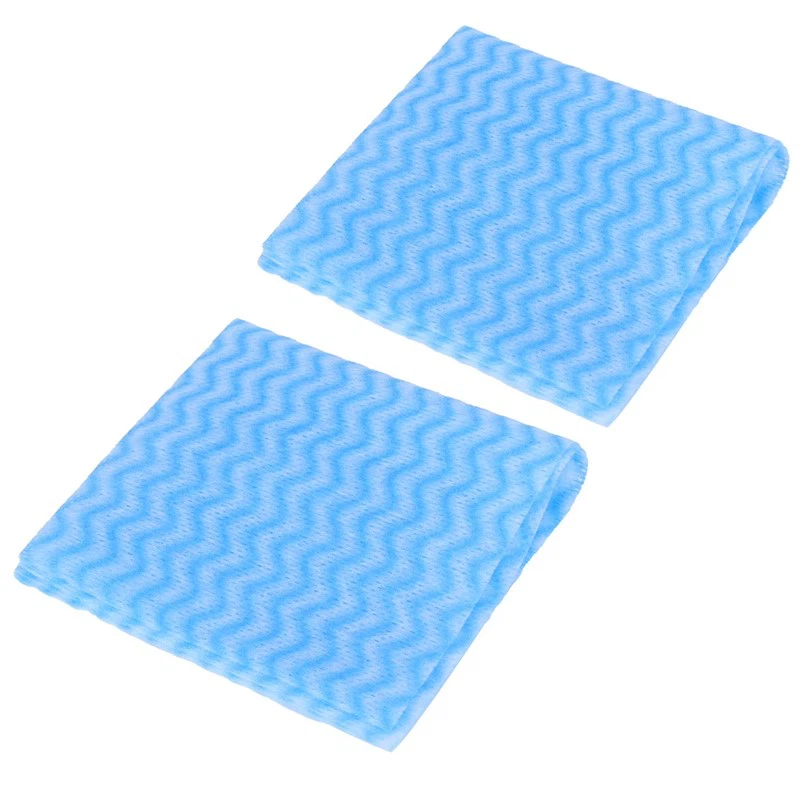
Using the wrong cloth on the right surface is almost as bad as using a bad cloth altogether.
|
Surface |
What Matters Most |
Best Cloth Choice |
|
Glass and mirrors |
Zero fiber release |
Lightweight lint-free cleaning cloth |
|
Stainless steel |
Streak-free finish |
Viscose polyester blend cloth |
|
Food prep surfaces |
Food-safe cleaning cloth compliance |
Spunlace non-woven fabric |
|
Industrial equipment |
Chemical-resistant cleaning cloth |
High GSM polyester fiber blend |
|
Electronics |
Ultra lint-free, ideally anti-static |
100% polyester fiber spunlace |
|
Automotive paint |
Softness, zero scratching |
Low GSM soft cleaning cloth roll |
|
Laboratory |
Precision, solvent-compatible |
Composite cleaning cloth, 40–70 GSM |

Color-Coded Rolls: Simple System, Serious Results
Color-coded cleaning cloths are one of those ideas that seem almost too simple - until you see what happens without them.
The concept is straightforward. Each color is assigned to one area or task. Nobody uses the bathroom cloth on the kitchen counter. Nobody uses the food service environment cloth near a hazardous zone. Cross-contamination prevention cloth systems like this are standard practice in healthcare facilities, hospitality industry operations, and commercial kitchen environments for good reason - they work.
A typical color-zone setup looks like this:
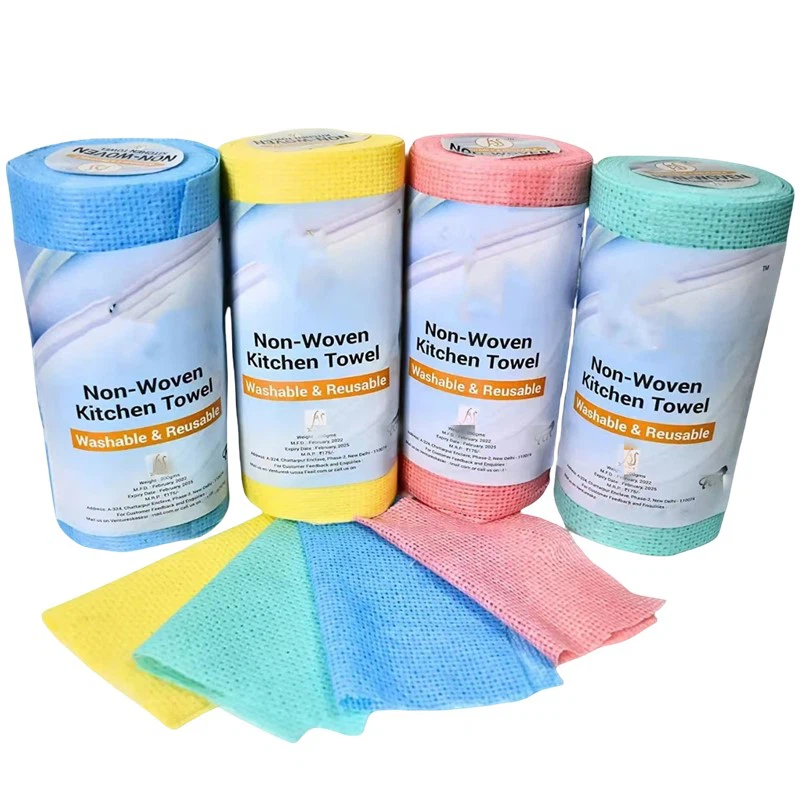
🟢 Green - food prep and food service environment
🔵 Blue - general surfaces and office areas
🟡 Yellow - bathroom and sanitation
🔴 Red - high-risk or hazardous zones
🩷 Pink - beauty and salon industry use
It is a hygienic cleaning wipe system that costs nothing extra to implement and prevents problems that are expensive to fix.

Warning Signs You Should Never Ignore
Before committing to a bulk cleaning cloth roll order, watch for these red flags:
Visible lint shedding when the cloth is still dry - it only gets worse when wet
Pilling or tearing on the first few uses - a wet strength failure
Streaking on smooth surfaces straight out of the roll
Uneven or jagged perforations - a perforation process quality issue
A strong chemical smell - often a sign of excess chemical bonding agents
Fiber release at the edges - poor roll slitting at the factory
Sheets that feel flimsy and collapse under light pressure - GSM cleaning cloth is too low for the stated application
Any one of these is a reason to ask questions. More than one is a reason to find a different cleaning cloth supplier.
The Real Cost of Cheap Cleaning Cloth Rolls
|
Factor |
Quality Cloth Roll |
Low-Cost Cloth Roll |
|
Sheets used per task |
1–2 |
3–5 |
|
Re-cleaning needed |
Rarely |
Often |
|
Lint shedding risk |
Very Low |
High |
|
Surface damage risk |
Very Low |
Medium to High |
|
Labor time per task |
Less |
More |
|
Supplier complaint rate |
Low |
High |
|
True cost per clean surface |
Lower |
Higher |
The numbers tell a consistent story. A disposable cleaning cloth roll that costs more per unit almost always costs less per clean surface - because it actually does the job in one pass. Fewer sheets. Less time. Less risk of having to redo the work.
Test Before You Commit
Always request a cleaning cloth sample order before placing a large order. Then put it through these five tests:
Dark surface lint test - wipe a dark surface slowly. Any fibers left behind? That cloth fails.
Glass streak test - wipe a clean glass panel. Any smear or haze? Fail.
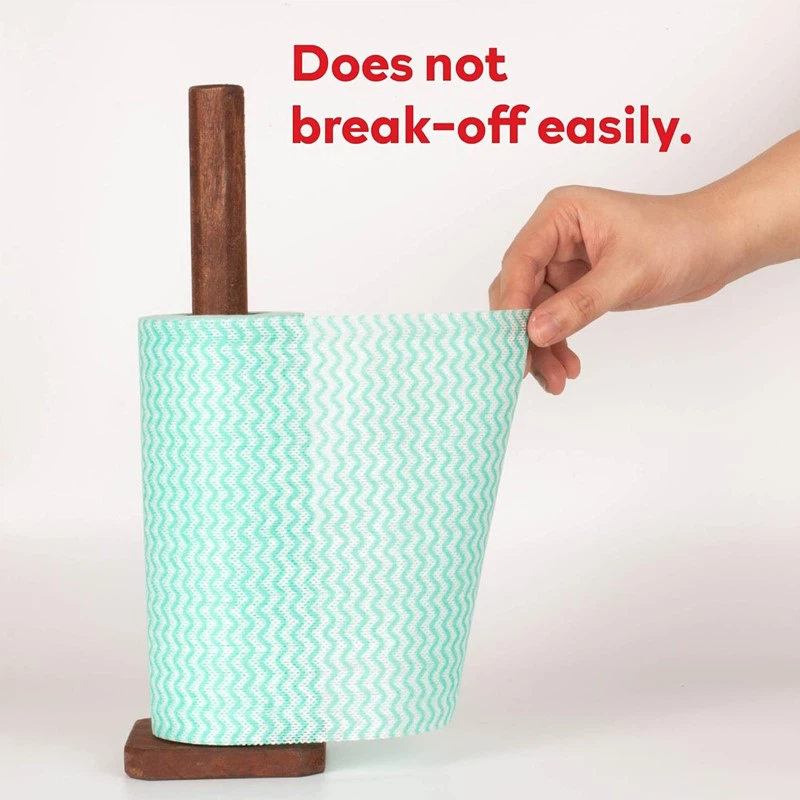
Wet strength pull test - soak the cloth and pull it firmly. A quality cloth holds. A poor one stretches and tears.
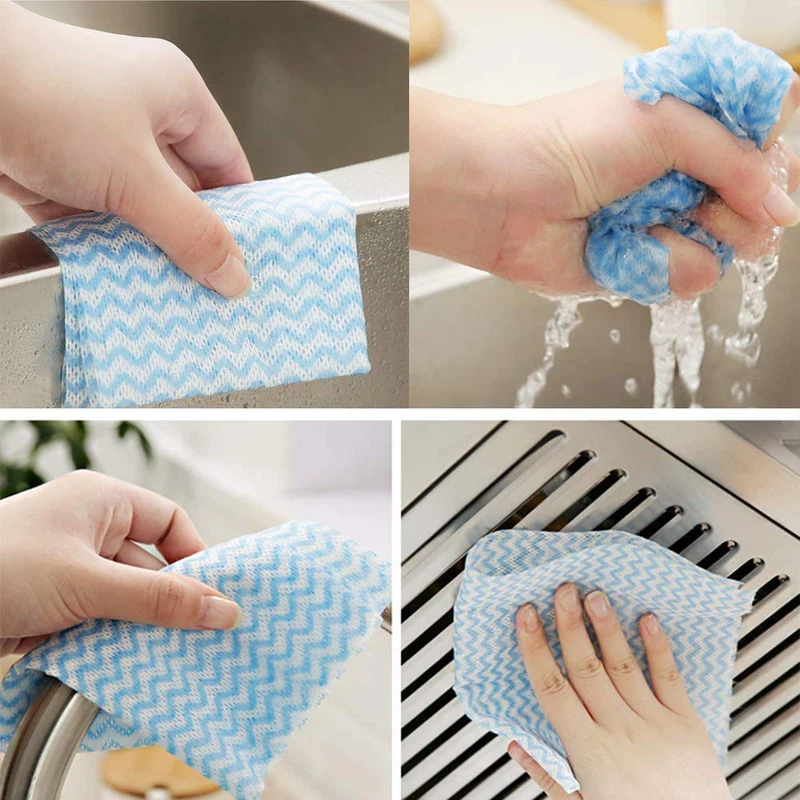
Absorbency drop test - drop water onto the cloth surface. It should absorb within 1–2 seconds. Anything slower means streaking risk.
10-wipe durability test - wipe a surface ten times with the same sheet. A quality cloth is still intact. A poor one starts breaking down by wipe five or six.
These tests take less than five minutes and can save a significant amount of money and frustration on a large bulk cleaning cloth roll order.
What the Market Data Confirms
|
Data Point |
Figure |
|
Global cleaning wipes market size (2023) |
~USD 4.8 billion |
|
Projected market size (2030) |
~USD 7.2 billion |
|
Non-woven fabric share of total market |
~68% |
|
Eco-friendly cleaning cloth segment growth |
9.5% CAGR |
|
Industrial cleaning cloth segment growth |
7.3% CAGR |
|
Post-pandemic hygiene demand increase |
+34% (2020–2022) |
|
Food service industry share of B2B market |
~22% |
Non-woven fabric - including spunlace non-woven fabric, airlaid cleaning cloth, and meltblown fabric formats - holds nearly 70% of the market. That is not a coincidence. It is the category that consistently delivers on lint-free, streak-free, and durable performance across the widest range of applications.
The Short Version
A genuinely good cleaning cloth roll does three things without fail: it leaves no lint, it leaves no streaks, and it holds together long enough to finish the job.
That comes down to material - a spunlace non-woven fabric or viscose polyester blend cloth built using the hydroentanglement process. It comes down to GSM - matched to the actual task, not just picked at random. And it comes down to construction - from perforation process quality to roll slitting precision to whether thermal bonding or chemical bonding was used.
Whether you are sourcing a food-safe cleaning cloth for a commercial kitchen, a lint-free cleaning cloth for a laboratory setting, or a solvent-compatible wipe for an automotive workshop - the fundamentals do not change.
Get the material right. Get the GSM right. Test before you scale. And never let a low unit price convince you that the total cost is low.
FAQs
Q1: What actually makes a cleaning cloth roll lint-free?
It comes down to how tightly the fibers are bonded together. Cloths made using the hydroentanglement process - like spunlace non-woven fabric - physically entangle the fibers rather than gluing them. The result is very low lint shedding even under heavy use. A viscose polyester blend cloth at the right GSM rating is the most reliable everyday option.
Q2: Why does my cleaning cloth keep leaving streaks on glass?
Almost always an absorbency rate problem. When a cloth cannot pull liquid away from the surface fast enough, the liquid spreads and dries into a streak. For glass cleaning cloth tasks, look for a viscose fiber dominant blend in the 60–80 GSM range. The viscose fiber absorbs fast - the liquid goes into the cloth, not back onto the glass.
Q3: How do I know which GSM to choose?
Match the cleaning cloth GSM to the intensity of the task. Light dusting - 30–50 GSM. General surfaces - 50–80 GSM. Food service, healthcare, or lab environments - 80–120 GSM. Heavy industrial or automotive workshop use - 120–180 GSM. When in doubt, go slightly higher rather than lower.
Q4: Can eco-friendly cleaning cloths really perform as well as synthetic ones?
Yes - when made correctly. Bamboo fiber cleaning cloth and biodegradable cleaning cloth options produced using the hydroentanglement process perform comparably to synthetic cloths on lint-free and streak-free metrics. The sustainable cleaning wipe category has matured significantly, and the eco-friendly cleaning cloth market is growing at 9.5% CAGR for good reason.
Q5: What is the smartest way to evaluate a cloth roll before placing a bulk order?
Always request a cleaning cloth sample order first. Run the dark surface lint test, the glass streak test, the wet strength pull test, and the absorbency drop test. If the cloth passes all four, it is worth considering for a larger bulk cleaning cloth roll order. If it fails even one, ask your cleaning cloth supplier for an alternative before committing.


