



Most people grab a paper towel for everything. Spilled grease? Paper towel. Drying dishes? Paper towel. Cleaning up after raw meat? Paper towel.
But here is the problem. A paper towel is not built for every kitchen cleanup task. Using the wrong one spreads bacteria, wastes money, and leaves your kitchen surfaces dirtier than before.
This guide gives you a clear task by task guide so you always pick the right disposable towel for the right job.
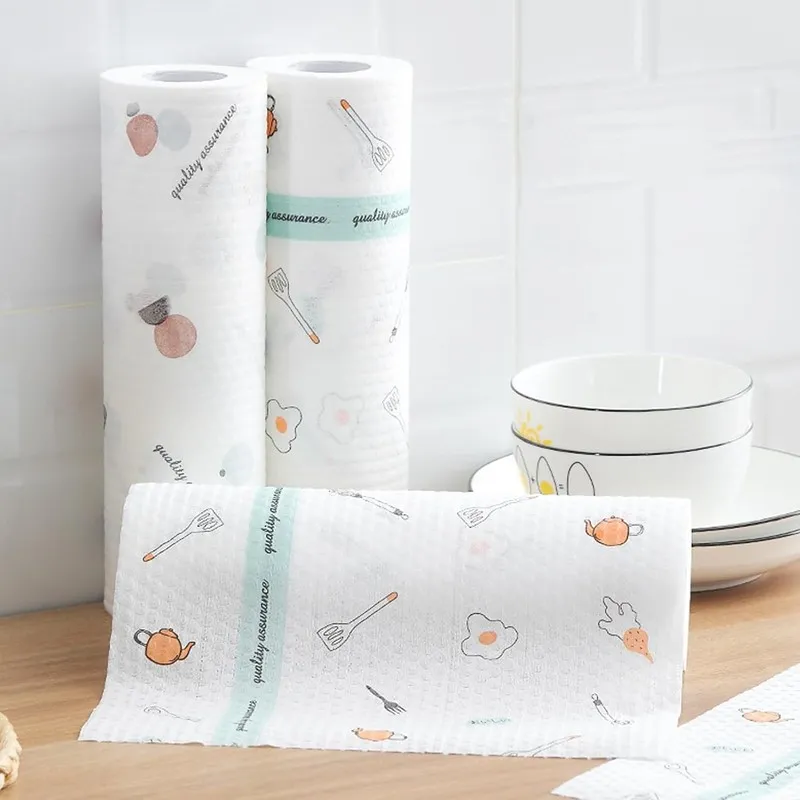
What Makes a Paper Towel Different From a Disposable Kitchen Towel?
They look similar. But they are built very differently.
What a Paper Towel Actually Is
A paper towel is made from virgin pulp, recycled fiber, or cellulose. Most come in single ply or two ply construction with an embossed surface. They are designed for:
Quick hand drying
Light surface wipe downs
Low demand kitchen cleanup tasks
A standard paper towel absorbs only 3 to 4 times its dry weight before it reaches saturation. Under heavy pressure it loses up to 50% of its structural integrity when fully wet. That means it tears apart exactly when you need it most.

What a Disposable Kitchen Towel Actually Is
A disposable kitchen towel is made from heavier materials including nonwoven fabric, microfiber, cellulose blend, bamboo fiber, and airlaid paper. It has a higher GSM towel weight and much stronger wet strength.
Absorbs up to 10 times its dry weight
Retains up to 80% of its dry strength when fully soaked
Produces up to 90% less lint than standard alternatives
Built for heavy duty kitchen cleanup and food preparation surface cleaning

Quick Side by Side Comparison
|
Feature |
Paper Towel |
Disposable Kitchen Towel |
|
Material |
Virgin pulp, recycled fiber, cellulose |
Nonwoven fabric, microfiber, cellulose blend, bamboo fiber |
|
Absorbency |
3 to 4 times dry weight |
Up to 10 times dry weight |
|
Wet strength |
Loses 50% when soaked |
Retains 80% when soaked |
|
Lint production |
Moderate to high |
Up to 90% less lint |
|
Best use |
Light tasks, hand drying |
Heavy tasks, food safety tasks |
|
Cost per sheet |
0.02 to 0.05 USD |
0.05 to 0.20 USD |
When to Use a Paper Towel
A paper towel is the right choice for low demand tasks where hygiene risk is low and liquid absorption needs are small.
The Right Jobs for a Paper Towel
Drying your hands - Hand drying after proper handwashing is the perfect job for a paper towel. Research shows it removes up to 77% of remaining bacteria from hand surfaces after washing. It is a cost effective kitchen cleanup choice for this high frequency low risk task.
Light surface wipe downs - Wiping dry crumbs or dust from a kitchen countertop with no grease or food residue. A paper towel handles this easily.
Blotting and dabbing food - Blotting excess oil from fried food or dabbing moisture from vegetables before cooking. Paper towel absorbency is enough for this job.
Covering food in the microwave - Preventing splatter without needing a heavy towel. A paper towel is the right weight and cost here.
Wrapping and storing produce - Keeping herbs and leafy greens fresh in the refrigerator by absorbing excess moisture. Paper towel material works well for this low demand task.
Cleaning up small dry messes - Sweeping up dry crumbs or powder spills on kitchen surfaces.
Paper Towel Best Use Summary
|
Task |
Why Paper Towel Works |
Hygiene Risk |
|
Hand drying |
Removes 77% of remaining bacteria |
Low |
|
Light countertop wipe |
Sufficient for dry low residue surfaces |
Low |
|
Blotting food |
Adequate absorbency for food contact tasks |
Low |
|
Microwave cover |
Right weight and cost for splatter prevention |
Low |
|
Produce storage |
Absorbs moisture around stored food |
Low |
|
Dry mess cleanup |
Handles crumbs and dry debris easily |
Low |

When to Use a Disposable Kitchen Towel
A disposable kitchen towel is the right choice when the task involves heavy liquid absorption, grease, raw meat, or any situation where cross contamination prevention and food safe towel selection matter.
The Right Jobs for a Disposable Kitchen Towel
Drying dishes and glassware - Microfiber disposable towels achieve streak free glass drying in 94% of test cases. They produce up to 90% less lint making them the clear winner for dish drying and glassware cleaning.
Raw meat and poultry spill cleanup - This is non negotiable. Paper towels used to wipe raw meat surfaces transferred pathogens to clean surfaces in up to 68% of test cases when reused even once. A disposable kitchen towel used once and thrown away is the only safe choice here. This is the one task one towel rule in action.
Wiping down greasy surfaces - Nonwoven disposable kitchen towels absorb cooking oil and grease up to 40% more effectively than standard paper towels. For stovetop cleaning and countertop degreasing a disposable kitchen towel is the right tool.
Heavy duty kitchen spill cleanup - Large liquid absorption tasks overwhelm a paper towel fast. A cellulose blend disposable kitchen towel handles up to 10 times its dry weight in liquid without falling apart.
Food preparation surface cleaning - Food prep surface cleaning requires the strongest kitchen surface bacteria removal possible. Using the wrong towel here is one reason approximately 57% of foodborne illness cases originate from home kitchen environments.
Stovetop and oven surface cleaning - Heat residue, grease buildup, and food debris on stovetop surfaces destroy a standard paper towel. A heavy duty disposable towel handles this task without tearing.
Pet mess cleanup - Absorbency rate and wet strength both matter here. A paper towel is not enough. A disposable kitchen towel is the hygienic single use hygiene solution.
Disposable Kitchen Towel Best Use Summary
|
Task |
Why Disposable Kitchen Towel Works |
Hygiene Risk |
|
Dish and glass drying |
94% streak free, 90% less lint |
Low to medium |
|
Raw meat spill cleanup |
Eliminates pathogen transfer risk |
Very high |
|
Greasy surface wiping |
40% better grease absorption |
High |
|
Large spill cleanup |
Absorbs 10x dry weight without tearing |
Medium |
|
Food prep surface cleaning |
Strongest bacteria removal performance |
Very high |
|
Stovetop cleaning |
Handles heat residue and heavy grease |
High |
|
Pet mess cleanup |
Strong wet strength, single use hygiene |
High |

The Hygiene Case for Choosing the Right Towel
Microbial contamination and pathogen transfer are real risks in the home kitchen. Here is what the data shows:
Bacteria including E. coli survived on used paper towels for up to 72 hours under normal kitchen temperature conditions
Surfaces cleaned with low absorbency towels retained up to 40% more bacterial residue than surfaces cleaned with heavy duty disposable kitchen towels
Only 33% of home cooks use a fresh disposable towel after handling raw meat - the majority reuse the same paper towel across multiple food preparation areas
Approximately 55% of households reuse paper towels for secondary tasks after first use increasing cross contamination risk significantly
Single use disposable kitchen towels used correctly reduced surface bacterial colony formation by up to 85% compared to multi use alternatives
The one task one towel rule is simple. Use one towel for one job. Then throw it away. This single habit eliminates most kitchen hygiene risk from towel selection.
Cost - Using the Right Towel Without Wasting Money
Less than 25% of consumers can accurately describe the difference between a paper towel and a disposable kitchen towel. That lack of awareness leads to overspending in the wrong places.
Households that match towel type to task reduce overall disposable towel spending by up to 25%
Approximately 65% of paper towel use in home kitchens involves tasks that could be handled by a lower cost alternative
Bulk buying disposable kitchen towels reduces cost per sheet by 30 to 40%
Annual household paper towel spending averages 80 to 120 USD per year - much of it on tasks that do not need that product
Use paper towels for cheap high frequency low risk tasks. Use disposable kitchen towels for high risk high demand tasks where performance and food safety protocol justify the higher cost per use.
Environmental Impact - Making a Smarter Choice
|
Option |
Environmental Impact |
Better Alternative |
|
Standard paper towel |
Contributes to 3000 tons of daily landfill waste |
Recycled fiber paper towel |
|
Standard disposable kitchen towel |
Takes up to 17 years to break down |
Bamboo fiber or compostable towel |
|
Bamboo fiber disposable towel |
Biodegrades in 2 to 6 months under composting |
Best eco choice for heavy tasks |
|
Recycled fiber towel |
Reduces raw material use by up to 60% |
Best eco choice for light tasks |
The eco friendly disposable towel market is growing at 6 to 8% annually as more home cooks and sustainability consultants push for biodegradable paper towels and compostable kitchen towels. Only 40% of consumers currently choose recycled paper towels when available. That number needs to grow.

The Complete Task by Task Guide
|
Kitchen Task |
Use This Towel |
Reason |
|
Hand drying |
Paper towel |
Cost effective, removes 77% of bacteria |
|
Light countertop wipe |
Paper towel |
Sufficient for low residue dry surfaces |
|
Blotting food before cooking |
Paper towel |
Adequate absorbency for food contact |
|
Microwave splatter cover |
Paper towel |
Right weight and cost |
|
Produce storage wrapping |
Paper towel |
Absorbs moisture around stored food |
|
Dry crumb cleanup |
Paper towel |
More than enough for dry debris |
|
Dish and glassware drying |
Disposable kitchen towel |
Lint free, streak free, strong wet strength |
|
Raw meat spill cleanup |
Disposable kitchen towel |
Eliminates pathogen transfer, use once toss |
|
Greasy surface wiping |
Disposable kitchen towel |
40% better grease absorption |
|
Large liquid spill |
Disposable kitchen towel |
Absorbs 10x dry weight without tearing |
|
Food prep surface cleaning |
Disposable kitchen towel |
Strongest bacteria removal |
|
Stovetop and oven cleaning |
Disposable kitchen towel |
Handles heat residue and heavy grease |
|
Pet mess cleanup |
Disposable kitchen towel |
Strong wet strength, single use hygiene |
The Simple Rule for Choosing the Right Towel Every Time
Light task. Low risk. Low mess. - Use a paper towel
Heavy task. High risk. Heavy mess. - Use a disposable kitchen towel
Only 20% of households actively select their disposable towel type based on the specific kitchen task at hand. But approximately 38% of households now stock both and use each one correctly. That number is growing - and for good reason.


