



Face masks keep you safe. They stop germs. They stop dust. You have two main choices. Ear loop masks. And tie-on masks. Which one should you buy? This guide will help you pick. We compare comfort. We compare fit. We compare cost. By the end, you will know what to buy.
What Is an Earloop Mask?
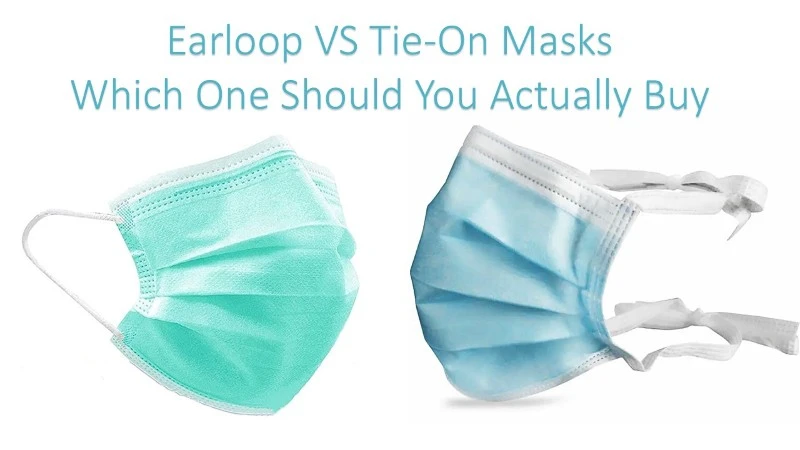
An ear loop mask is easy to spot. It has two stretch bands. The bands hook around your ears. You put it on in seconds. No ties. No knots. It is great for short trips and quick errands. You see them on the bus and at the store.
Ear loop masks are the most common style. They are cheap. You can buy them in big boxes.
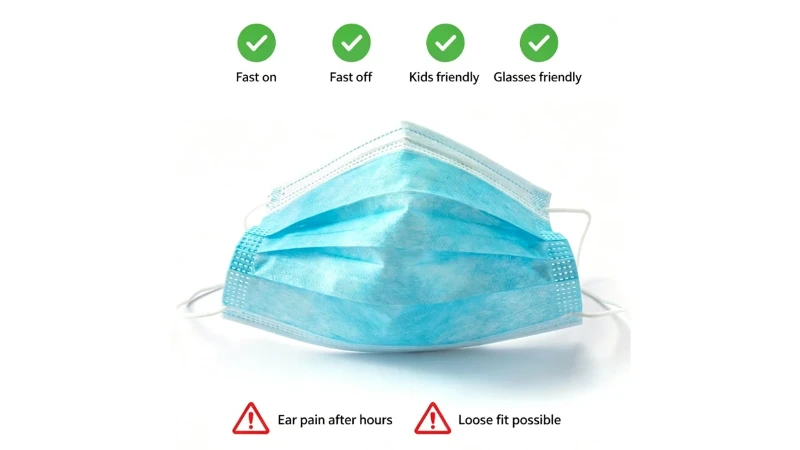
Good things about ear loop masks:
- Fast to put on.
- Fast to take off.
- Easy for kids.
- Easy with glasses.
Bad things about ear loop masks:
- Hurts your ears after a few hours.
- Can sit loose on your face.
What Is a Tie-On Mask?
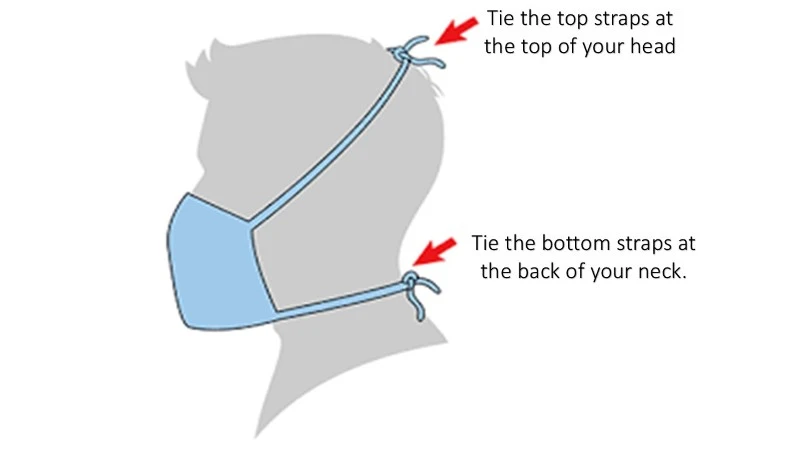
A tie-on mask is different. It has straps. The straps go over your head. You tie the top straps first. You tie the bottom straps next. It takes more time. But it fits better.
Doctors use them. Nurses use them. So do dentists and lab workers. They work long hours. Their ears need a break.
Tie-on masks are less common, but many people who try them never go back.
Good things about tie-on masks:
- Fits your face.
- No ear pain.
- You can make it as tight as you like.
- Good for long hours.
Bad things about tie-on masks:
- Slow to put on.
- Hard to put on with one hand.

Earloop vs Tie-On at a Glance
Here is a quick look at both masks.
|
What you want |
Ear loop mask |
Tie-on mask |
|
Fast to put on |
Yes |
No |
|
Easy to take off |
Yes |
No |
|
Hurts ears |
Yes, after hours |
No |
|
Fits your face |
So-so |
Yes |
|
Good for long hours |
No |
Yes |
|
Good for short trips |
Yes |
Yes |
Which One Hurts Less?
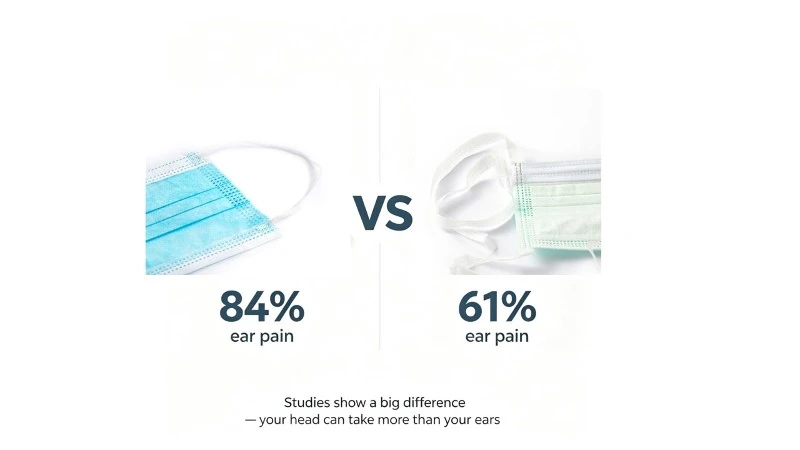
This is the big question. Ear loop masks push on your ears. Tie-on masks push on your head. Your head can take more. Studies show a big difference.
- About 84 out of 100 people got ear pain with ear loop masks.
- About 61 out of 100 people got ear pain with tie-on masks.
Health workers feel it most. More than half got pain behind the ears. That is about 51 out of 100. Other people? Only about 28 out of 100.
One big survey asked 542 people. About 65 out of 100 said their ears hurt. That is 352 people.
Ears are a weak spot. The loops pull all day. After four hours, they start to hurt. After eight hours, it is worse. One study found that after four hours of wear, about 67 out of 100 health workers had skin problems. The ears were a top spot.
About 1 in 5 people changed their mask. Their skin got hurt. They picked a new style.
What is an ear saver? A small band that holds the loops at the back of your head. Your ears get a break.
Fit and Safety: Which One Is Safer?
A mask works best when it fits. No gaps. No air leaks. A tight fit keeps you safe. A loose fit does not.
Tie-on masks fit better. You can pull the straps. You can make them tight. Ear loop masks can sit loose. Loose masks let air in. Studies show head
straps fit better than ear loops.
But you can fix an ear loop mask. Try these tricks:
- Knot and tuck the bands.
- Use a small toggle.
- Wear an ear saver.
- Wear two masks.
These fixes help a lot. One study found a plain mask stopped about 56 out of 100 bits of cough spray. The fixes made it even better.
Do not cross the bands. That does not help. Knot and tuck works. Toggles work. Two masks work best of all.
Bend the nose wire too. It seals the top of the mask. It stops air leaks. It also stops fog on your glasses.
A good fit is about you, not the mask. Faces are different. Some are small. Some are big. Some have beards. Try a few styles. See what fits.
Who Should Buy Which?
Pick by how you use a mask.
- Short trips. Get an ear loop mask. Fast and easy.
- Long hours. Get a tie-on mask. Your ears will thank you.
- Nurses and doctors. Get a tie-on mask. Long shifts are hard on ears.
- Kids. Get an ear loop mask. Soft bands work best.
- Glasses wearers. Get a tie-on mask. A tight fit stops fog.
- Clinics. Get tie-on masks for staff. Get ear loop masks for visitors.
Most people buy both. Use the right one for the day.
How to Get a Good Fit
Any mask works better with a good fit. Do these steps:
- Bend the nose wire.
- Cover your nose and mouth.
- Cover your chin.
- Tie the top straps at the top of your head.
- Tie the bottom straps at the back of your neck.
- Check for gaps. No air should blow out the sides.
What to Check Before You Buy
Ask six questions before you buy:
- Does it fit my face?
- Is it soft?
- Does it have three layers?
- Can I breathe in it?
- How long will I wear it?
- How much does one mask cost?
Three layers are key. A soft inner layer. A filter in the middle. A strong outer layer. Good masks have all three. Soft masks are also good for sensitive skin.
Check the price per mask, not per box. Some masks look cheap but cost more per piece. A mask is only a few cents. But it adds up over a year.
FAQ
Which is more comfortable? Tie-on masks, for long wear. Ear loop masks are fine for short wear.
Which is safer? The one that fits. Tie-on masks fit better.
Why do nurses pick tie-on masks? Their ears hurt with ear loops. They work long hours.
Can I wear an ear loop mask all day? Your ears may hurt. Use an ear saver.
How do I stop ear pain? Use an ear saver. Or switch to a tie-on mask.
Which is cheaper? Both cost about the same. Check the price per mask.
The Bottom Line
Here is the simple rule.
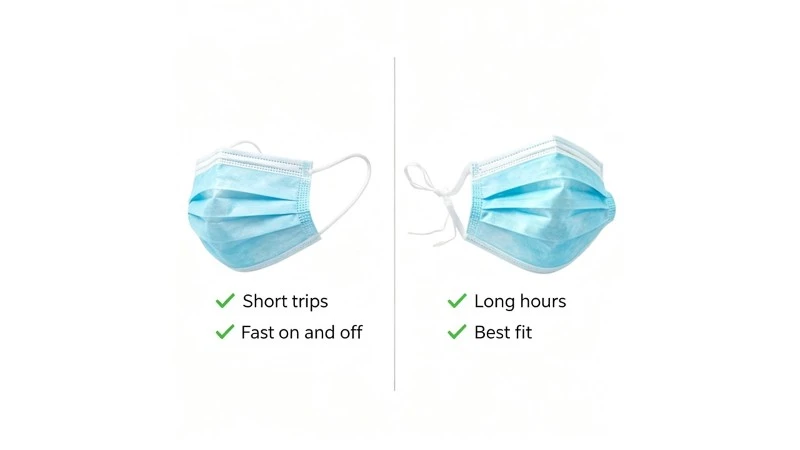
- Short trips. Buy ear loop masks.
- Long hours. Buy tie-on masks.
- Best fit. Tie-on masks.
- Fast on and off. Ear loop masks.
Do not overthink it. Buy a small pack of each. Test them at home. Pick your favorite. Your ears will feel the difference.
Where the Numbers Come From
These are peer-reviewed studies about mask comfort and fit.
- A study of health workers: 84 out of 100 got ear pain with ear loops. 61 out of 100 with head straps.
- A survey in China: 51 out of 100 health workers felt ear pain. 28 out of 100 other people did.
- A survey of 542 people: 352 felt ear pain.
- A fit study: head straps fit better than ear loops.
- A fix study: knot and tuck helps. Two masks help most.


