



What You Need to Know About Coverall Costs
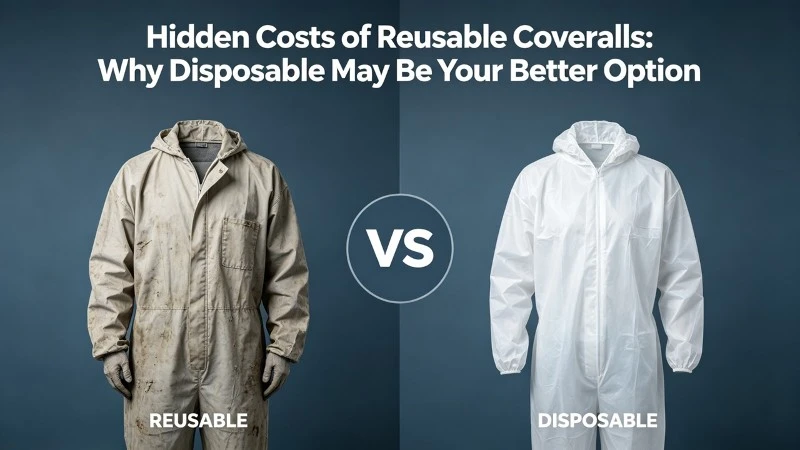
Many people think reusable coveralls cost less. They look at the purchase price and think they save money. But this is wrong.
The real cost is much higher. Hidden costs add up fast. This article shows you the full picture.
Why Price Tags Lie
When you buy reusable coveralls, you only see one number. That is the cost per garment. But this number does not tell the whole story.
You must think about total cost of ownership. This means:
- Washing costs
- Storage needs
- Replacement expenses
- Labor costs
- Testing fees
These hidden expenses make reusable coveralls much more expensive than they look.
Hidden Cost #1: Washing and Cleaning Bills
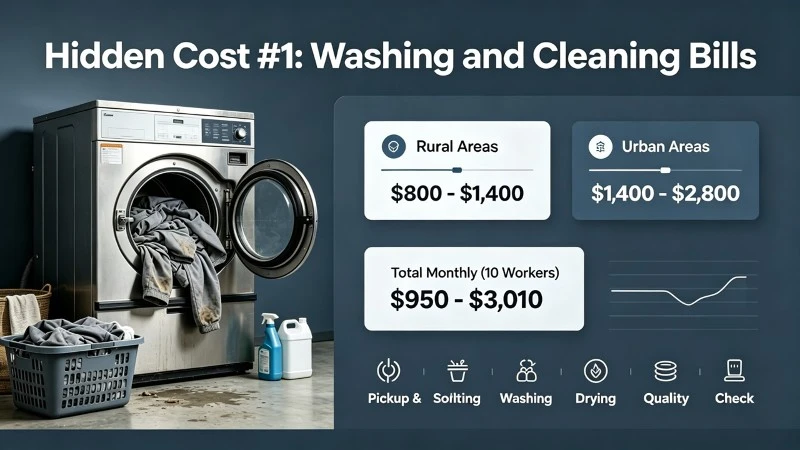
Reusable coveralls need washing after each use. This costs real money.
Commercial laundries charge by weight. Here are the real costs:
|
Location Type |
Cost Per Pound |
Monthly Cost (10 Workers) |
|
Rural areas |
$1.00 - $1.75 |
$800 - $1,400 |
|
Urban areas |
$1.75 - $3.50 |
$1,400 - $2,800 |
|
Processing labor |
$0.19 - $0.26 extra |
$150 - $210 |
For a small team of 10 workers, you pay $950 to $3,010 every month just for washing.
What Washing Includes
Laundry processing is not simple. It includes:
- Pickup and delivery from your site
- Sorting dirty garments
- Washing cycles with special soap
- Drying at high heat
- Ironing and folding
- Quality checks before return
- Transportation costs both ways
Each step costs money. Each step takes time.
Rush Service Costs More
Need clean coveralls fast? Rush processing adds big fees. Some facilities pay double for emergency cleaning.
Hidden Cost #2: Garments Wear Out Fast
Fabric degradation happens with every wash. Your reusable coveralls get weaker each time.
How Washing Damages Coveralls
- Seams start to fail
- Zippers break down
- Fabric gets thin
- Protective barriers stop working
- Particle shedding increases
Material breakdown means you lose contamination control. Your workers are not fully protected.
Replacement Happens Often
Worn reusable garments must be thrown away. You need to:
- Inspect every garment after washing
- Remove damaged ones
- Buy replacements often
- Track which ones are good
This takes staff time. This costs money. This never ends.
Studies show seam failure rates go up after just 20-30 wash cycles.

Hidden Cost #3: Storage Space Costs Money
Reusable coveralls need lots of room.
Storage Requirements
You must have space for:
- Clean inventory ready to use
- Dirty garments waiting for pickup
- Extra stock for emergencies
- Climate control to protect fabric
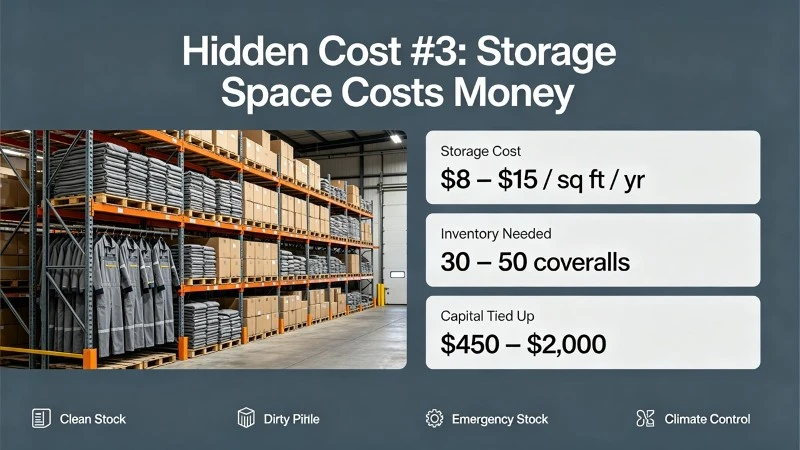
Warehouse costs add up. In cities, storage space can cost $8-15 per square foot each year.
Inventory Management Work
Someone must:
- Track how many you have
- Rotate stock so garments wear evenly
- Order new ones at the right time
- Count inventory regularly
- Update computer systems
This is administrative burden. It takes labor costs. It needs staff training.
Money Stuck in Inventory
Small facilities need at least 30-50 coveralls in rotation. At $15-40 per coverall, that is $450-2,000 sitting on shelves.
This is capital you cannot use for other things. This is opportunity cost.
Hidden Cost #4: Testing and Checking Costs
In controlled environments, you must test reusable coveralls after washing.
Validation Requirements
Pharmaceutical plants, cleanrooms, and healthcare facilities need:
- Performance verification after each wash cycle
- Contamination testing to check for germs
- Barrier protection testing
- Documentation for every test
Testing Expenses
Third-party laboratories charge real money:
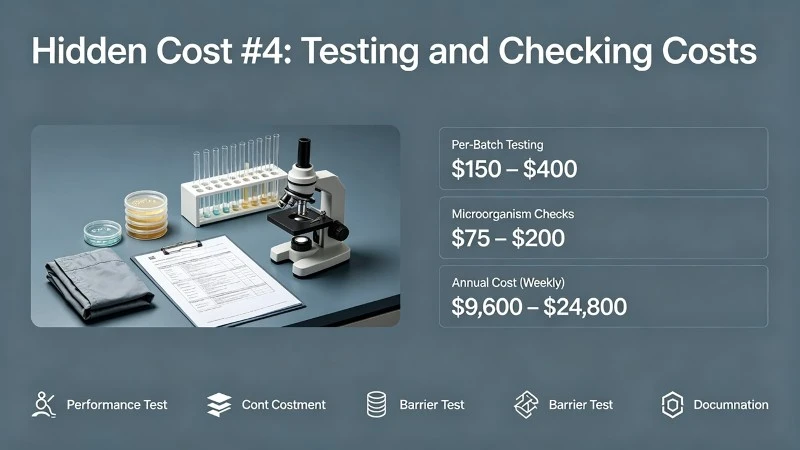
- Per-batch testing: $150-400
- Microorganism checks: $75-200
- Quality control labor: 2-4 hours per batch
For a small facility doing weekly testing, this adds $9,600-24,800 per year.
Compliance Risk
If garments fail testing, you must:
- Throw away the whole batch
- Rush order new coveralls
- Document the failure
- Investigate what went wrong
Failed batches cost thousands of dollars.
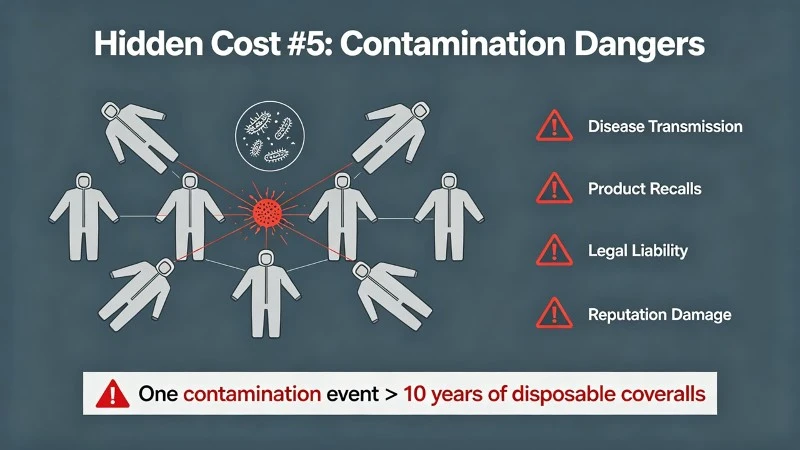
Hidden Cost #5: Contamination Dangers
Cross-contamination is a serious risk with reusable coveralls.
How Contamination Spreads
During laundry processing:
Different batches mix together
Pathogens can survive washing
Microorganisms transfer between garments
Incomplete cleaning leaves germs behind
Studies show contamination transfer happens even with good cleaning.
Health and Safety Risks
In healthcare facilities:
- Disease transmission can occur
- Patient safety is at risk
- Infection control becomes harder
- Workplace accidents increase
In food processing plants:
- Bacterial growth contaminates products
- Product recalls cost millions
- Reputation damage hurts business
Liability Costs
If contamination causes problems:
- Legal expenses can be huge
- Insurance costs go up
- Regulatory fines add up
- Lost business hurts profits
One contamination event can cost more than 10 years of using disposable coveralls.
Why Disposable Coveralls Save Money
Disposable coveralls eliminate all these hidden costs.
- No Washing Needed
- Zero laundry bills
- No pickup service
- No washing equipment
- No drying costs
- No processing labor
You save $950-3,010 every month on washing alone.
Always Like New
Every single-use garment is:
- Brand new and clean
- Full strength protection
- Perfect seams and zippers
- Consistent performance
- No degradation
You get guaranteed garment integrity every time.
Simple Storage
Disposable coveralls need much less space:
- Smaller boxes stack easily
- No dirty garment area needed
- No climate control required
- Simple inventory tracking
You can store 3-4 times more disposable coveralls in the same space.
No Testing Required
Single-use garments do not need:
- Requalification testing
- Performance checks after use
- Contamination testing
- Batch validation
You save $9,600-24,800 per year on testing.
Zero Contamination Risk
Disposable coveralls eliminate:
- Cross-contamination completely
- Pathogen transfer between users
- Disease transmission risks
- Infection control problems
Each garment goes straight to waste disposal after one use. Microorganisms cannot spread to the next person.
Real Cost Comparison
Here is what a small facility with 10 workers really pays:
|
Cost Type |
Reusable (Monthly) |
Disposable (Monthly) |
|
Purchase/Order |
$0 (already own) |
$400-600 |
|
Laundry service |
$950-3,010 |
$0 |
|
Processing labor |
$150-210 |
$0 |
|
Storage space |
$100-200 |
$30-50 |
|
Testing |
$800-2,066 |
$0 |
|
Replacement |
$200-400 |
$0 |
|
Inventory management |
$150-300 |
$50-75 |
|
TOTAL |
$2,350-6,186 |
$480-725 |
Disposable coveralls cost $1,870-5,461 less per month.
That is $22,440-65,532 saved per year.
When Disposable Makes Sense
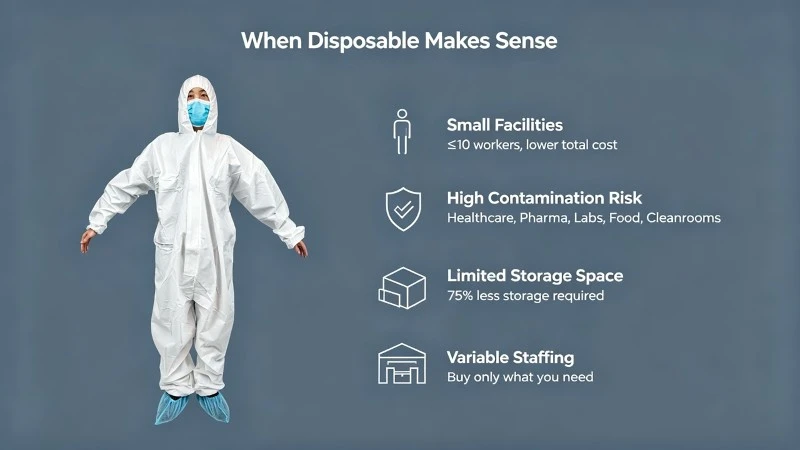
Disposable coveralls are the best choice when:
Small Facilities
If you have 10 or fewer workers, disposable almost always costs less. The laundering infrastructure costs too much for small teams.
High Contamination Risk
In these places, disposable is mandatory:
- Healthcare facilities (hospitals, clinics)
- Pharmaceutical plants
- Research laboratories
Patient safety and contamination control are more important than any cost savings.
Limited Storage Space
If warehouse space is tight, disposable needs 75% less room.
Variable Staffing
If your team size changes, disposable is easier. You only buy what you need. No excess inventory. No capital tied up.
The Bottom Line
Reusable coveralls look cheap. But hidden costs make them expensive.
- Cost less overall
- Save time
- Reduce risk
- Simplify operations
For small facilities and high-risk environments, disposable is the smart choice.


