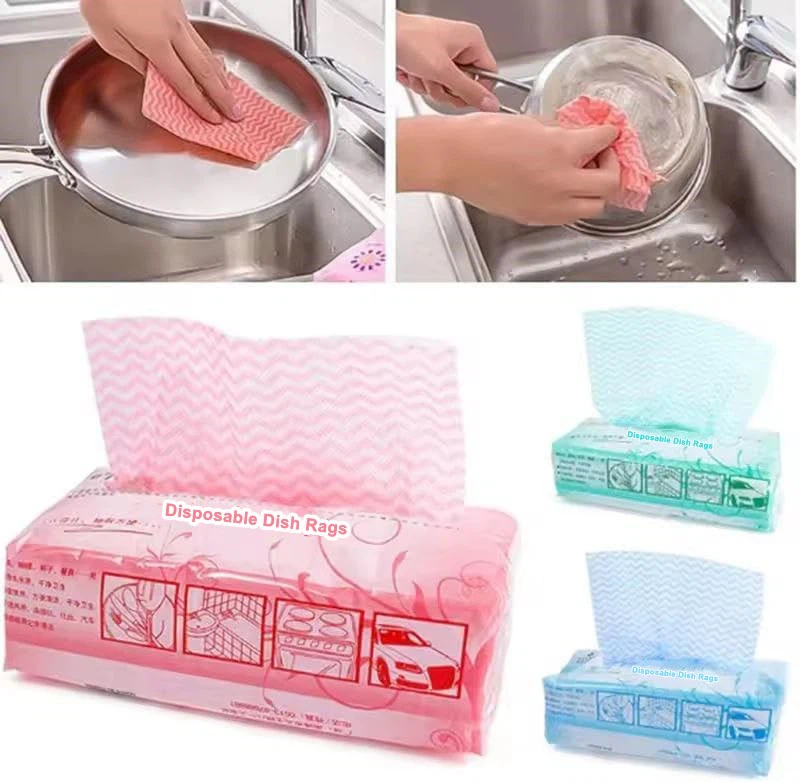


Walk into almost any kitchen and you will find the same thing - a damp cloth hanging off the oven handle, used for everything from wiping hands to cleaning the counter to drying dishes.
Nobody questions it.
But maybe they should.
Disposable dish towels have a reputation problem. Most people hear "disposable" and picture something thin, papery, and wasteful. The kind of thing that falls apart the moment it gets wet.
That picture is outdated. And the data behind it tells a very different story.

What You Are Actually Dealing With
First - a disposable dish towel is not a paper towel. That distinction matters more than most people realize.
The better ones are built from non-woven dish towel materials engineered specifically for kitchen work. The manufacturing process - particularly the hydroentanglement process used in spunlace dish towels - physically locks fibers together using high-pressure water jets. No glue. No chemical bonding. Just fiber interlocked with fiber.
What comes out the other side is a cloth that feels genuinely cloth-like, holds its shape when wet, and does not leave lint shedding all over your glass surfaces.
The main material types each bring something different to the table:
Spunlace non-woven fabric - low fiber release, strong tensile strength, handles scrubbing without falling apart
Airlaid paper towel - softer feel, excellent liquid absorption rate, closer to a paper texture
Viscose dish towel blended with polyester fiber - the workhorse option, balances wet strength and absorbency better than most
Bamboo fiber dish towel - genuinely eco-friendly disposable dish towel that does not sacrifice performance to get there
Wood pulp dish towel and cellulose fiber formats - solid for lighter tasks, better suited to home use
Then there is GSM rating - grams per square meter - which tells you how dense and heavy the cloth is:
|
GSM Range |
Feel |
Best Use |
|
30–50 GSM |
Very thin |
Light drying, delicate surfaces |
|
50–80 GSM |
Medium weight |
Everyday home kitchen |
|
80–120 GSM |
Substantial, cloth-like |
Commercial kitchen, food prep |
|
120–180 GSM |
Heavy duty |
Heavy spills, industrial kitchen |

The Thing Nobody Wants to Think About
Here is an uncomfortable truth about that cloth on your oven handle.
A University of Mauritius study tested kitchen towels from real households. 49% came back positive for bacterial growth after regular use. In homes with children, E. coli showed up in 36.7% of the towels tested.
The American Society for Microbiology found something even more striking - damp kitchen towels harbor bacteria 1,000 times faster than dry ones.
Think about what that means in practice.
You wipe your hands after handling raw chicken. The cloth stays damp. An hour later, someone uses it to wipe the food prep surface before making a sandwich. That is cross-contamination - and it happens in home kitchens and commercial kitchen environments every single day.
Mold formation kicks in faster than most people expect. Kitchen towel odor prevention becomes a losing battle once bacterial growth takes hold. Washing helps - but not as much as people assume. Unless you are washing at high temperatures with the right detergent, you are mostly just moving bacteria around in warm water.
A single-use kitchen towel sidesteps all of this. You use it. You throw it away. The germ transfer cycle never gets a chance to start.
The Performance Numbers Are Genuinely Surprising
This is the part that catches most people off guard.
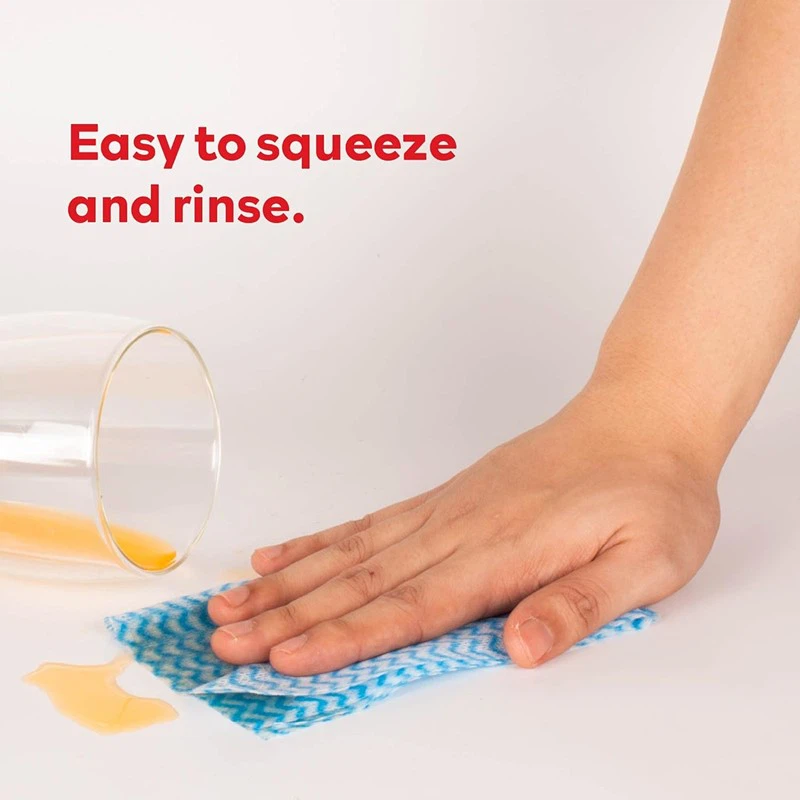
A quality spunlace dish towel made from a viscose and polyester fiber blend absorbs up to 6 times its own weight in liquid. A standard cotton reusable cloth sits at around 3 times its own weight. That is not a small gap.
|
Towel Type |
Liquid Held Per Gram |
Wet Strength Retention |
|
Spunlace viscose/polyester |
Up to 6x own weight |
85–95% |
|
Airlaid paper dish towel |
Up to 5x own weight |
70–80% |
|
Bamboo fiber disposable |
Up to 4.5x own weight |
75–85% |
|
Standard cotton reusable |
Up to 3x own weight |
90–100% |
|
Low-grade paper towel |
1.5–2x own weight |
30–50% |
The wet strength numbers matter just as much as absorbency. A cloth that absorbs well but disintegrates under pressure is useless. The hydroentanglement process in spunlace non-woven fabric keeps the cloth structurally intact even when it is fully saturated - which is why it holds up to real scrubbing on a greasy surface.
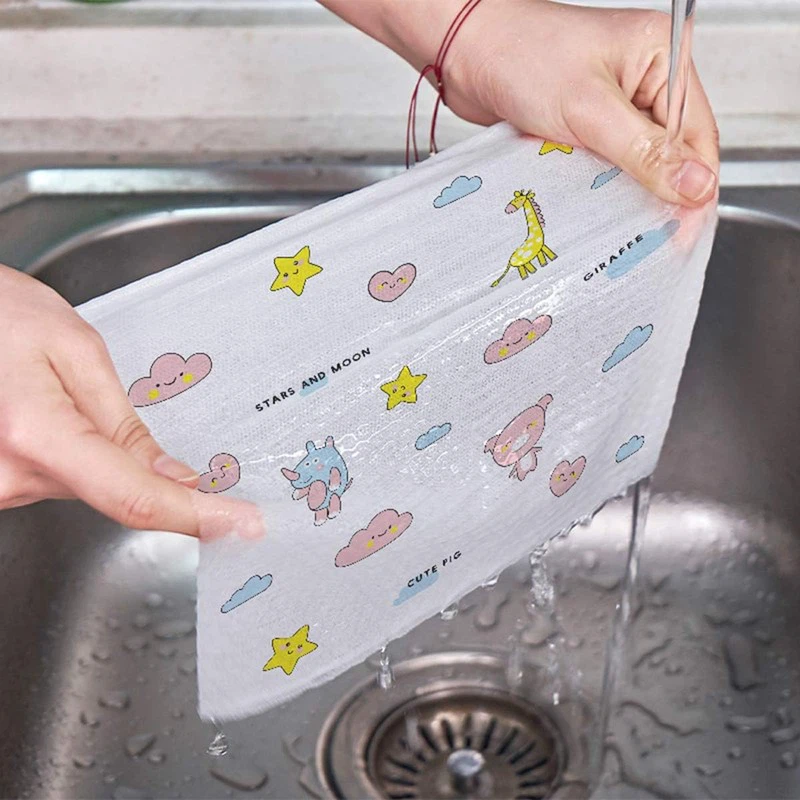
The embossed dish towel surface texture plays a role here too. Those raised patterns are not just aesthetic - they create friction that lifts grease absorption off surfaces instead of smearing it around. Combined with low fiber release, you get a streak-free dish towel result on glass and stainless steel in a single pass.
Where They Actually Outperform Reusable Cloth
|
Surface or Task |
Why a Disposable Wins |
|
Glass surfaces |
Zero lint, no streaks, clean finish every time |
|
Stainless steel |
Streak-free dish towel result without polishing afterward |
|
Food prep surface |
No cross-contamination, genuinely food-safe kitchen towel |
|
Greasy cooking surfaces |
Embossed dish towel texture lifts grease cleanly |
|
High-volume commercial kitchen |
Speed and consistency without a laundry cycle |
|
Spill response |
Fast liquid absorption rate, no wringing out a soaked cloth |
In a food service environment or catering operation, this is not a minor convenience. It is the difference between a kitchen that runs cleanly and one that is quietly accumulating contamination risk with every shift.

What the Cost Comparison Actually Looks Like
The instinct is to compare unit price. That comparison almost always makes reusable cloth look cheaper.
It is not the right comparison.
|
Cost Factor |
Reusable Cloth |
Disposable Dish Towel |
|
Washing cost per cycle |
USD 0.50–1.20 |
None |
|
Labor time for washing |
15–30 min per load |
Zero |
|
Contamination risk cost |
Moderate–High |
Very Low |
|
Annual cost (commercial kitchen, 50 uses/day) |
USD 800–1,400 |
USD 600–1,100 |
|
True cost per clean surface |
Higher than it appears |
Lower than it appears |
When you fold in kitchen cloth laundry cost, labor time, cloth replacement cycles, and the potential cost of a contamination incident - the disposable dish towel cost per use looks very different. A bulk dish towel roll ordered at wholesale pricing brings that number down further.
The true cost reusable dish towel calculation is almost always higher than the sticker price suggests.
How to Pick the Right One
A few things worth knowing before you buy:
Match GSM to the job - light home kitchen tasks work fine at 50–80 GSM, but anything in a commercial kitchen or food service environment needs 80–120 GSM minimum
Spunlace viscose/polyester blend gives you the best combination of absorbency and wet strength for most tasks
Bamboo fiber or recycled fiber blend if sustainability is a priority - performance is genuinely comparable now
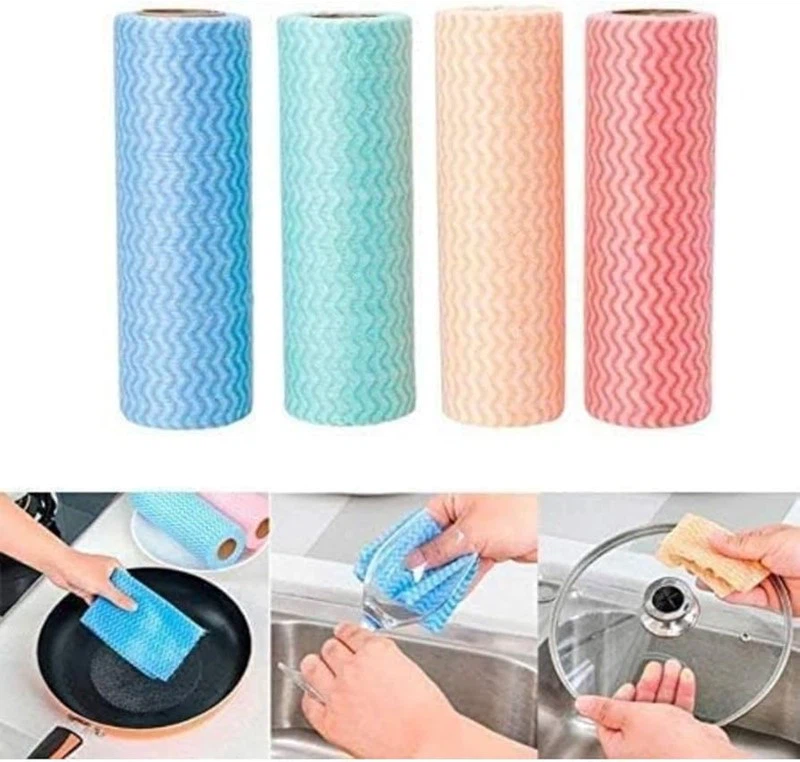
Perforated dish towel roll format works well for high-volume settings - check that the roll perforation is clean and even, not ragged
Flat sheet dish towel format suits controlled environments where you want a fixed sheet size every time
Always test samples before committing to a bulk dish towel roll order - run a lint test on glass, a wet strength pull test, and a 10-wipe durability check
The Bottom Line
The reputation disposable dish towels carry does not match what the better products actually do.
They absorb more liquid than cotton cloth. They eliminate bacterial growth and cross-contamination risk by design. They leave glass surfaces and stainless steel cleaner in a single pass. And when you look at the full cost picture - not just the unit price - they are often cheaper to run than the reusable alternative.
The key is getting the material and GSM right for your specific use. Get those two things right, and the performance speaks for itself.