



You're about to place a bulk order. Stop. The wrong disposable bed sheet roll material will cost you far more than the price gap on the invoice. It can mean failed infection control standards, unhappy patients, and wasted budget. This guide gives you the straight answer - no fluff.
Quick Answer: All Three Materials at a Glance
Before we go deep, here's your fast reference.
| Property | PP Non-Woven | SMS Non-Woven | Hydrophilic (PP+PE / Viscose Blend) |
|---|---|---|---|
| Absorbency | Low | High | High (top layer) |
| Fluid Resistance | Low–Medium | High | High (PE film backing) |
| Softness | Medium | Medium–High | High |
| GSM Range | 15–40 GSM | 35–65 GSM | 40–80 GSM |
| Barrier Protection | Basic | Strong | Dual-layer |
| Best For | Dry, low-risk use | High-fluid clinical | Wound care, gynecology |
| Cost Level | Low | Medium–High | Medium–High |
Still need the full picture? Keep reading.
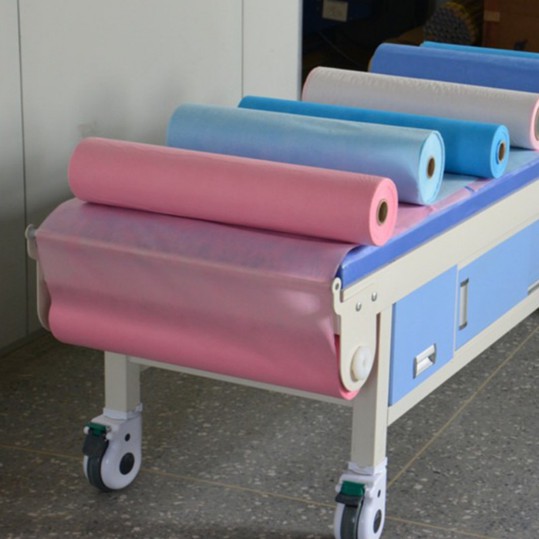
What Each Material Actually Is
Polypropylene (PP) Non-Woven - The Workhorse
PP non-woven fabric is strong, tear-resistant, non-allergenic, and easy to use. It's a single-layer spunbond fabric made from polypropylene (PP) fiber. Light. Cost-effective. It gets the job done in dry-contact settings.
However, PP non-woven bed sheets are not very absorbent. The moment a fluid enters the picture - blood, wound exudate, body fluids - PP falls short fast. It offers only basic barrier performance and a low fluid resistance rating.
Best settings: physiotherapy clinic, chiropractic table, radiology department, ultrasound table. All dry contact. No fluid risk. High volume.
Typical GSM: 15–40 grams per square meter
SMS (Spunbond-Meltblown-Spunbond) - The Clinical Powerhouse
SMS is the most widely used material in medical-grade single use medical sheets - and for good reason.
It uses a three-layer design: two outer spunbond layers wrap a central meltblown filter layer. That meltblown core is what makes SMS different. It blocks bacteria. It resists fluid. It holds up under pressure.
SMS non-woven material features:
- High absorbency - soaks up moisture fast
- Waterproof backing options available
- Strong bloodborne pathogen protection
- Widely used in hospital outpatient bed sheets, disposable surgical drapes, and clinical gowns
Think of the disposable non woven bed sheet roll - this is exactly where SMS shines at scale.
Best settings: emergency room, dialysis center, oncology unit, nursing home, hospital wards
Typical GSM: 35–65 GSM
"When in doubt for a hospital ward, choose SMS. It's the clinical standard."
Hydrophilic Non-Woven (PP+PE or Viscose Blend) - The Dual-Layer Specialist
Here's where it gets smart. Hydrophilic non-woven fabric has two sides that do two completely different jobs.
- The soft top layer (viscose spunlace or hydrophilic PP) pulls moisture away from the patient's skin
- The waterproof backing (PE film or microporous film layer) stops fluid from soaking through to the mattress below
That's dual-layer barrier protection in one sheet. Patient stays dry. Mattress stays clean. HAI risk drops.
The disposable hydrophilic stretcher sheet is a great example of this dual-layer technology in real clinical use - one side absorbs, the other protects.
Best settings: wound care clinic, gynecology examination, surgical prep, aged care facility, dialysis center
Typical GSM: 40–80 GSM (combined composite weight)
Which Material Does Your Setting Actually Need?
Stop ordering the same roll for every room. It's costing you either money or compliance.
| Clinical Setting | Right Material | GSM Range | Key Reason |
|---|---|---|---|
| GP Clinic | PP Non-Woven | 15–25 GSM | Dry contact, high turnover |
| Physiotherapy / Chiropractic | PP Non-Woven | 20–30 GSM | No fluid exposure |
| Radiology / Ultrasound | PP Non-Woven | 20–30 GSM | Light contact only |
| Emergency Room | SMS | 40–55 GSM | High fluid risk, fast turnover |
| Dialysis Center | SMS or Hydrophilic | 50–65 GSM | Extended fluid exposure |
| Wound Care Clinic | Hydrophilic PP+PE | 60–80 GSM | Exudate + mattress protection |
| Gynecology | Hydrophilic PP+PE | 60–80 GSM | High fluid + patient comfort |
| Surgical Prep / Surgical Suite | SMS or Sterile Hydrophilic | 55–80 GSM | Sterile field + full barrier |
| Aged Care Facility | Soft Viscose Blend | 50–70 GSM | Comfort + incontinence care |
| Oncology Unit | SMS or Hydrophilic | 50–65 GSM | Immunocompromised patients |
When in doubt, go one grade up. Upgrading material costs cents per patient. A single HAI (hospital acquired infection) incident costs far more. The CDC, WHO, and APIC all stress single patient use protocol for exactly this reason.
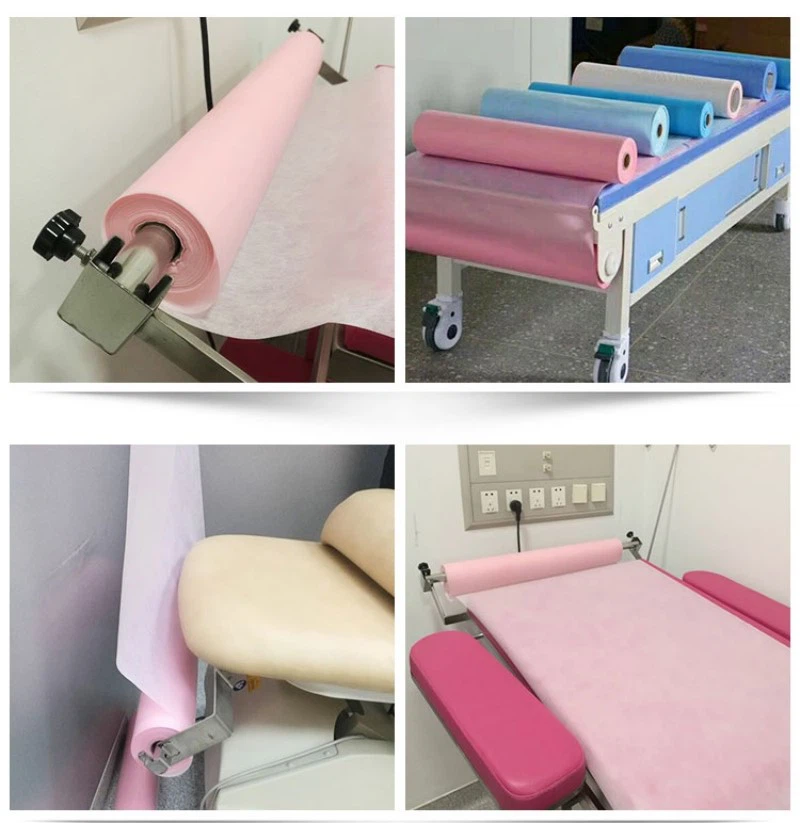
GSM: The Number Most Buyers Overlook
A supplier quoting you "30 GSM PP" and another quoting "30 GSM SMS" are not giving you the same product. Not even close.
GSM - grams per square meter - tells you the fabric weight. It's the most reliable proxy for thickness, absorbency, and barrier performance in a bulk wholesale disposable sheet order.
Here's how the GSM bands work in practice:
- 15–25 GSM → Ultra-light PP. Dry contact only. Lowest cost per patient bed sheet.
- 25–40 GSM → Standard PP or light SMS. GP clinic and physio use.
- 40–55 GSM → Mid-weight SMS. Hospital wards and emergency rooms.
- 55–80 GSM → Heavy SMS or hydrophilic composite. High-fluid clinical settings.
Always request a barrier performance test report - not just a product data sheet. Some suppliers quote nominal GSM. The actual tested GSM can run 10–15% lower. Look for ISO 13485, CE Mark, GMP, and AAMI PB70 barrier test data as your minimum standard. If the product needs to be sterile, demand an EO sterilization (ethylene oxide) certificate. For EN 13795 compliance in surgical settings, ask specifically.
Also note: pair your disposable bed sheets with a quality disposable mattress cover for complete surface hygiene in high-fluid environments.
True Cost Per Patient: Don't Let Unit Price Fool You
Think of unit price like an iceberg. What you see on the invoice is just the tip. The real cost hides below the surface.
| Cost Factor | PP | SMS | Hydrophilic |
|---|---|---|---|
| Unit price per roll | Lowest | Medium | Medium–High |
| HAI risk level | Higher | Low | Lowest |
| Patient comfort complaints | Medium | Low | Lowest |
| Laundry cost | Zero | Zero | Zero |
| True cost per patient | Low–Medium | Medium | Medium (justified) |
For a GP clinic with 80 patients a day doing dry examinations? PP makes strong financial sense. For a dialysis center or wound care unit? The math flips entirely. The total cost of ownership of reusable linen - laundry cost, staff labor linen cost, and linen replacement cycle cost - almost always exceeds the cost per patient bed sheet of a good single-use roll.
The hydrophilic disposable bed cover is a strong companion product for facilities needing that same dual-layer protection in a flat-cover format.
Before You Order: 6 Things to Check
Knowing your material is step one. Knowing what to demand from your supplier is step two.
✅ GSM Test Report - Request actual tested GSM, not nominal spec
✅ ISO 13485 Certification - Non-negotiable for medical-grade product
✅ CE Mark / FDA Registration - Market-dependent but always preferred
✅ AAMI PB70 Barrier Test Data - For any fluid-resistant claims
✅ Sterility Certificate - EO sterilization cert if sterile product is required
✅ Sample Program - Any serious supplier offers pre-order samples
If your supplier hesitates on any of these six points, that hesitation is your answer.
The Final Verdict
Choose PP if your facility handles dry, light-contact procedures at high volume. GP clinics, physiotherapy centres, radiology departments - PP is your budget-smart answer.
Choose SMS if you deal with moderate-to-high fluid risk and need strong cross contamination prevention and contact precautions barrier performance. Emergency rooms, hospital wards, dialysis centers - SMS is the clinical standard.
Choose Hydrophilic if patient comfort and dual-layer protection are both non-negotiable. Wound care units, gynecology, aged care, and surgical prep environments should not compromise here. The soft spunlace non-woven top layer paired with a PE (polyethylene) film or CPE (chlorinated polyethylene) backing gives you the best of both worlds.
For eco-conscious procurement teams: ask your supplier about PLA (polylactic acid) biodegradable options, Ecocert certified sheets, and Green Seal compliant low carbon medical supply ranges. Sustainable healthcare linen is a growing priority - and the right supplier will already stock them.
Ready to order? Request a free sample pack - PP, SMS, and Hydrophilic side by side - and compare the materials in your own hands before you place a bulk order. A confident supplier will always say yes.


