



One strand of hair in a food product can shut down a production line, trigger a product recall, and destroy a brand's reputation overnight. That's not an exaggeration. Hair is classified as a physical contaminant - and physical contamination is one of the top causes of food safety failures around the world.
If you manage a commercial kitchen, a food processing plant, a bakery, or any catering operation, this guide gives you straight answers. You'll learn which disposable chef hat style fits your setting, which non-woven chef cap fabric works best, what the law actually requires, and how to buy smart in bulk.

Why Disposable Chef Hats Are Non-Negotiable
Hair contamination in food is a serious problem. The WHO, CDC, and FDA all identify physical contamination and microbial contamination from food handlers as major causes of foodborne illness. A disposable chef hat is your last line of defence between your kitchen and a failed food safety audit.
Three contamination risks that proper food hygiene headwear directly stops:
- Physical contamination - hair foreign body landing in food product
- Microbial contamination - scalp bacteria and dandruff transfer to food contact surfaces
- Cross contamination - handler-to-food pathogen transfer during hygienic food preparation
However, not all chef hats stop all three risks equally well. The style and disposable chef hat material you choose makes a real difference.
Disposable Chef Hat Styles: Which One Fits Your Operation?
Walk into any food service cap catalogue and you'll find at least six styles. Most buyers pick the cheapest one. That's a mistake.
| Style | Best Setting | Key Feature |
|---|---|---|
| Bouffant Cap | Food processing, bakery, hospital kitchen | Full hair restraint, elastic band |
| Peaked Disposable Chef Hat | Restaurant kitchen, hotel kitchen | Professional look + basic coverage |
| Flat Top Chef Hat | Front-of-house, catering | Traditional style, single use kitchen hat |
| Pleated Chef Cap | Catering events, school canteen | Lightweight, high volume |
| Disposable Hair Net | Meat processing, dairy production, cold storage | Maximum containment |
| Balaclava Hood | Clean room food production, pharmaceutical food grade | Full head and neck coverage |
For example, a meat processing plant and a fast food kitchen both fall under the same food safety regulation headwear rules - but they need completely different hats. The disposable bouffant caps range covers most food processing and catering needs in one place.
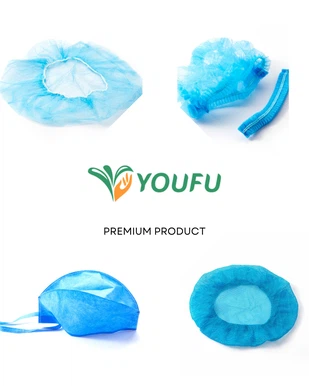
Material Comparison: PP vs. SMS vs. Spunlace
The material your chef hat is made from determines whether it actually stops contamination - or just looks like it does.
| Property | PP Non-Woven | SMS Non-Woven | Spunlace Non-Woven |
|---|---|---|---|
| Breathability | Medium | High | Highest |
| Barrier Protection | Basic | Strong | Medium |
| Softness | Medium | Medium–High | Highest |
| GSM Range | 15–30 GSM | 25–50 GSM | 40–70 GSM |
| Fluid Resistance | Low | High | Low–Medium |
| Best Setting | Low-risk catering | Food processing, meat, dairy | Long-shift kitchen, hospital |
| Cost Level | Lowest | Medium | Medium–High |
GSM - grams per square meter - is the number most buyers ignore. Think of it as the fabric's weight. Heavier GSM means more material, stronger barrier performance, and better protection. A 20 GSM polypropylene (PP) non-woven cap is fine for a dry catering event. A 45 GSM SMS (Spunbond-Meltblown-Spunbond) cap is what you need on a meat processing plant floor or a dairy production facility line.
Spunlace non-woven is the softest option. It's best for long-shift comfort in hospital kitchen settings and premium food service headwear environments where staff wear hats for eight hours straight.
The disposable hood category covers full-coverage options - including balaclava hood styles - for clean room food production and pharmaceutical food grade environments where maximum food handler hygiene compliance is required.
What Food Safety Regulations Actually Require
Ignorance of food safety headwear regulations is not a defence during an audit. Here's what the law says in plain language:
| Region | Regulation | Requirement |
|---|---|---|
| 🇺🇸 USA | FDA 21 CFR Part 117 / USDA FSIS | Effective hair restraint for all food handlers in food manufacturing headwear settings |
| 🇪🇺 EU | EC 852/2004 | Food business operators must ensure personal cleanliness - including headwear where hair contamination food risk exists |
| 🌍 International | ISO 22000 / HACCP | Documented HACCP Critical Control Point controls for physical contamination - headwear is a direct control measure |
| 🏆 Certification | BRC Global Standard / SQF | Headwear policies mandatory as part of food production hygiene audit requirements |
| 🇦🇺 Australia/NZ | FSANZ Standard 3.2.2 | Food handlers must take all practical steps to prevent unnecessary food contact - headwear is a documented control |
GMP (Good Manufacturing Practice) and the GFSI (Global Food Safety Initiative) both reinforce these requirements at a global level. ServSafe food handler training programs include headwear compliance as a core module.
In short: if your staff aren't wearing proper food grade disposable headwear, you're already non-compliant in most countries.

Matching Chef Hat to Facility: The Decision Table
Here's the part most guides skip.
| Facility Type | Recommended Style | Material | GSM | Key Reason |
|---|---|---|---|---|
| Restaurant Kitchen | Peaked or Flat Top | PP Non-Woven | 20–30 GSM | Professional look + basic food safety headwear |
| Catering / Events | Pleated Bouffant | PP Non-Woven | 15–25 GSM | High volume, low food service cap cost per unit |
| Bakery | Bouffant Cap | SMS Non-Woven | 25–40 GSM | Flour dust + hair restraint food service |
| Meat Processing | Hair Net + Bouffant | SMS Non-Woven | 35–50 GSM | Maximum containment, fluid resistant kitchen cap |
| Dairy Production | Bouffant Cap | SMS Non-Woven | 30–45 GSM | Hygiene-critical environment |
| Hospital Kitchen | Bouffant or Spunlace | Spunlace | 40–60 GSM | Long shift comfort + food handler hygiene protocol |
| Food Packaging Line | Bouffant Cap | SMS Non-Woven | 35–50 GSM | Food packaging line headwear contamination control |
| Cold Storage | Balaclava Hood | PP or SMS | 30–45 GSM | Full coverage in cold environment |
| Clean Room / Pharma | Balaclava Hood | SMS Non-Woven | 40–60 GSM | Maximum barrier, food grade PPE standard |
| School Canteen | Pleated Cap | PP Non-Woven | 15–25 GSM | Cost-efficient, basic food safety compliance |
| Fast Food Kitchen | Bouffant or Peaked | PP Non-Woven | 20–30 GSM | High turnover, single use kitchen hat |
| Hotel Kitchen | Peaked Chef Hat | PP or Spunlace | 25–40 GSM | Professional appearance + kitchen hygiene standards |
When in doubt, go one grade up on material. The cost difference per hat is cents. A failed food safety audit headwear inspection costs thousands.

Disposable vs. Reusable: The Real Cost Calculation
Comparing disposable chef hat supplier pricing to reusable hat costs on unit price alone is like comparing a taxi fare to the full cost of owning a car. [4] The numbers look very different once you add everything up.
| Cost Factor | Disposable Chef Hat | Reusable Chef Hat |
|---|---|---|
| Unit purchase cost | Very low | Higher upfront |
| Laundry cost | Zero | Significant per cycle |
| Cross contamination risk | Eliminated each use | Increases with reuse |
| Staff compliance | Easy - fresh hat each shift | Requires laundering policy |
| Food safety audit risk | Low | Higher if laundering fails |
| True cost per use | Low | Medium–High |
For a food processing plant running three shifts a day with 50 staff, laundry costs for reusable hats alone typically exceed the full cost of wholesale food service cap orders within 60 days.
The disposable boot & shoe covers range pairs perfectly with disposable chef hats for full food handler PPE compliance from head to toe - especially in food laboratory hygiene hat and food manufacturing headwear settings.
Eco-Friendly Options: Biodegradable Chef Hats
Sustainability is no longer a nice-to-have in food facility procurement.It's becoming a tender requirement. Here's what's available right now:
- PLA (Polylactic Acid) biodegradable chef hats - compostable, plant-based, growing in availability
- Recycled PP non-woven options - reduced virgin plastic content
- Ecocert certified food-grade headwear - verified sustainable sourcing
- Low GSM lightweight options - less material per unit means a lower environmental footprint
That said, biodegradable chef hat options currently cost 15–30% more per unit than standard PP. That's a real consideration for high-volume food processing hygiene control operations.
The disposable plastic gloves range - including PE (polyethylene) and CPE (chlorinated polyethylene) options - rounds out a complete sustainable food industry PPE kit alongside eco-conscious headwear choices.
Frequently Asked Questions
Are disposable chef hats required by law? Yes - in most countries. FDA 21 CFR Part 117, EU EC 852/2004, and FSANZ Standard 3.2.2 all require effective hair restraint food service for food handlers.
What material is best for food processing? SMS non-woven is the gold standard. Its three-layer spunbond-meltblown-spunbond design provides strong barrier protection against hair, bacteria, and fluid in food processing plant environments.
What GSM should a food service chef hat be? Low-risk catering: 15–25 GSM PP. Standard kitchen: 25–35 GSM. Food processing and meat handling: 35–50 GSM SMS.
How often should disposable chef hats be changed? Best practice - and most HACCP protocols - require a fresh hat at the start of each shift, after breaks, and immediately after any contamination event.
What's the difference between a bouffant cap and a chef hat? A bouffant cap food industry style provides full 360° hair enclosure - ideal for food processing hygiene control. A peaked chef hat offers a traditional look - better suited to restaurant kitchen chef hat and hotel kitchen disposable hat settings.
The Bottom Line
Every disposable chef hat your facility uses is a documented, auditable control measure against physical and microbial contamination. The cost per unit is a fraction of what a single compliance failure will cost you.
Choose PP for low-risk, high-volume catering and restaurant environment.
Choose SMS for food processing, meat, dairy, and high-hygiene production lines
Choose Spunlace for long-shift comfort in hospital kitchens and premium food service
Ready to find the right hat for your facility? The disposable bouffant caps range and the full caps collection give you every style - from basic pleated chef cap options to full balaclava hood coverage - all in one place. Request samples before your next bulk order. A confident supplier will always say yes.


