



Soft vs. Durable: Choosing the Right Disposable Towel Material
Do you need disposable towels? Are you confused about which type to buy? This guide will help you pick the right one.
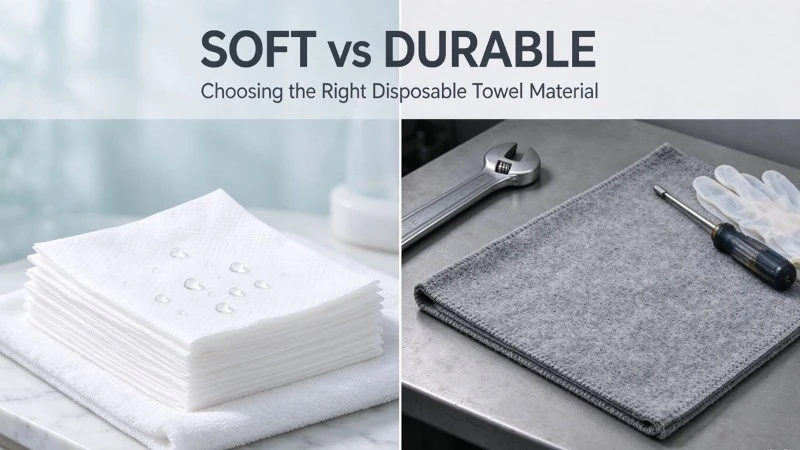
Disposable towels come in two main types: soft and durable. Each type works best for different jobs.
What Are Disposable Towels Made Of?
Most disposable towels are made from nonwoven fabric. This is not like regular cloth. The fibers are bonded together without weaving.
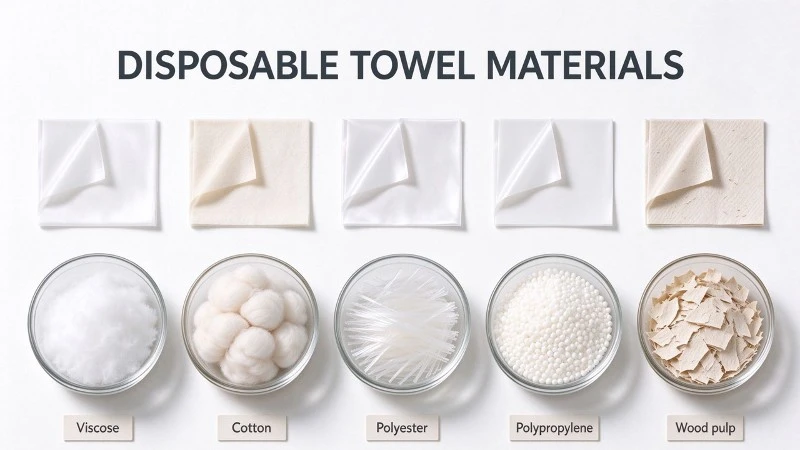
Common Materials
- Viscose fiber - Very soft, feels nice on skin
- Cotton fiber - Natural, gentle, absorbs water well
- Polyester fiber - Strong, lasts longer, good for tough jobs
- Polypropylene - Very strong, resists chemicals
- Wood pulp - Cheap, absorbs a lot, breaks down fast
How They Are Made
Two main ways to make disposable towels:
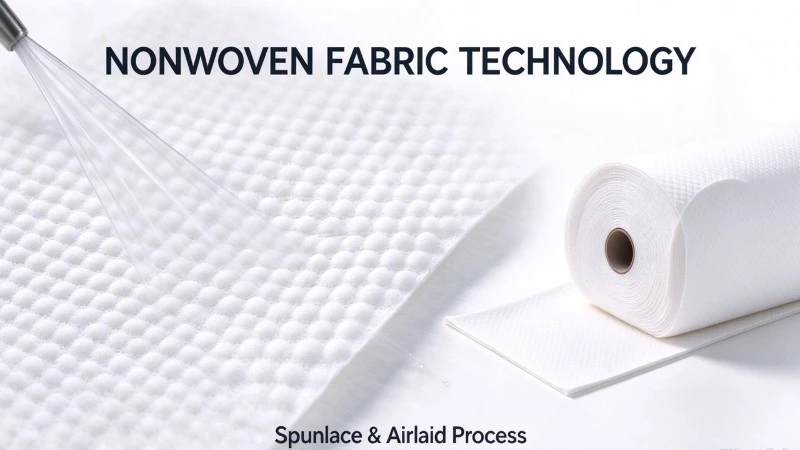
- Spunlace (also called hydroentanglement) - Water jets push fibers together
- Airlaid process - Air blows fibers into a web
Spunlace towels are lint-free and strong. They work great for most jobs.
Soft Towels: When Comfort Matters
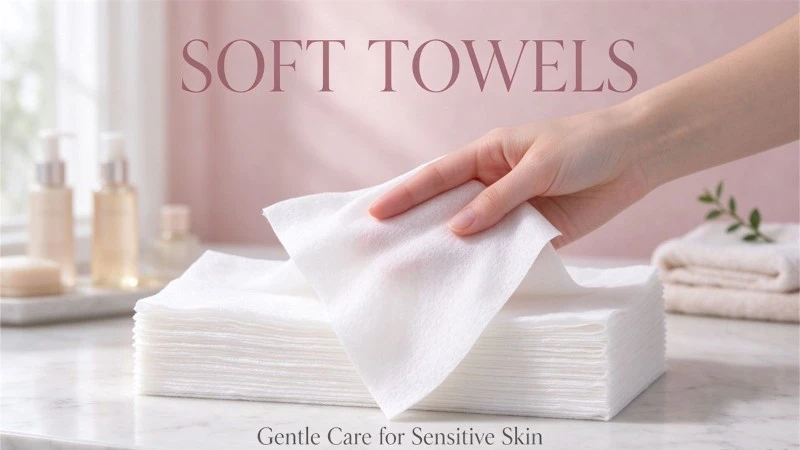
Soft disposable towels feel gentle on your skin. They are made mostly from viscose or cotton.
What Makes Them Soft?
- High viscose fiber content (70-100%)
- Light weight (35-60 GSM)
- Plush feel like cloth
- Very gentle texture
Note: GSM means grams per square meter. It tells you how thick the towel is.
Best Uses for Soft Towels
Soft towels work best when they touch skin:
- Facial cleansing and skincare
- Makeup removal
- Spa treatments on face and body
- Baby care and personal hygiene
- Guest bathroom use
- Salon facial work
- Care for sensitive skin (eczema, rosacea, acne)
Soft Towel Materials
| Material Type | Softness | Best For |
|---|---|---|
| 100% viscose spunlace | Very high | Face care |
| Cotton-faced towels | Very high | Baby care, spas |
| Viscose-polyester (70/30) | High | Salons, healthcare |
| Airlaid towels | Medium-high | Baby wipes |
Problems with Soft Towels
Soft towels have some weak points:
- Tear easily when wet
- Not good for hard scrubbing
- May need two or three towels per job
- Cannot clean rough surfaces well
Soft towels absorb 10-20 times their weight in water. This is great for cleaning up spills.
Durable Towels: When Strength Is Key
Durable disposable towels are strong and tough. They are made mostly from polyester or polypropylene.
What Makes Them Strong?
- High polyester content (70-100%)
- Heavy weight (70-120 GSM)
- Strong fiber bonds
- Good wet strength
- High tear resistance
Best Uses for Durable Towels
Durable towels work best for tough cleaning:
- Industrial cleaning tasks
- Automotive detailing and car care
- Gym equipment cleaning
- Workshop and garage use
- Kitchen grease and oil cleanup
- Scrubbing with chemicals
- Jobs where you use the towel 3-5 times
Durable Towel Materials
| Material Type | Strength | Best For |
|---|---|---|
| Polyester-dominant (70/30) | Very high | Car detailing, industrial |
| 100% polyester spunlace | Very high | Heavy scrubbing |
| Polypropylene composite | Very high | Chemical cleaning |
| Polyester-viscose (50/50) | High | Gyms, general use |
Problems with Durable Towels
Durable towels are not perfect:
- Rough texture
- Not good for face or sensitive skin
- May cause skin irritation
- Cost more per towel
Durable towels can be used 3-5 times before you throw them away. This saves money.
Key Things to Think About
Absorbency
How much water does the towel soak up?
- Soft towels: 10-20 times their weight
- Durable towels: 5-10 times their weight
Healthcare settings need towels that absorb 90% of liquid in 10 seconds.
Wet Strength
Does the towel stay strong when wet?
- Soft towels: Weak to medium
- Durable towels: Very strong
Wet strength matters if you clean with water or chemicals.
Lint-Free Performance
Does the towel leave fuzz behind?
Spunlace towels (any material) are very lint-free. This matters for:
- Healthcare use
- Automotive detailing
- Electronics cleaning
- Any job where lint is bad
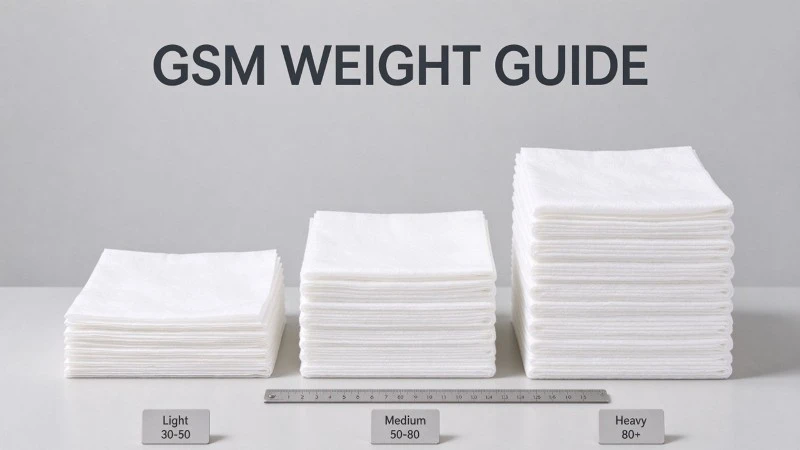
GSM Weight
GSM tells you how thick the towel is:
- 30-50 GSM: Light towels, single use
- 50-80 GSM: Medium towels, most common
- 80+ GSM: Heavy towels, very strong
Higher GSM means more durability and better absorbency.
Texture
Towels come in different textures:
- Smooth finish: Gentle, good for skin
- Pearl-textured: Bumpy, better grip
- Dual-sided: Smooth on one side, rough on other
Which Towel for Which Job?
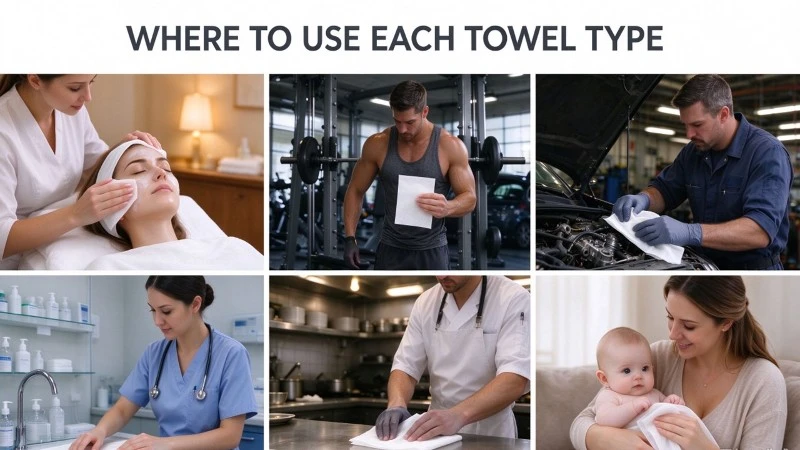
For Healthcare and Medical Use
- Material: Viscose-polyester (60/40)
- GSM: 40-60
- Why: Good absorbency, low-lint, clean
For Salons and Spas
- Material: High-viscose or cotton
- GSM: 40-70
- Why: Very soft, hypoallergenic, luxury feel
For Gyms
- Material: Polyester-viscose (50/50)
- GSM: 50-70
- Why: Strong enough, absorbs sweat, good price
For Industrial and Automotive
- Material: Polyester-dominant or polypropylene
- GSM: 70-100+
- Why: Very strong when wet, solvent resistance, reusable
For Food Service
- Material: Wood pulp or cellulose blend
- GSM: 40-60
- Why: Cheap, absorbs well, single use, sanitary
For Home Use
- Material: Cotton or viscose for face; polyester blend for cleaning
- GSM: 35-60
- Why: Versatile, comfortable, good value
Making Your Choice
Ask yourself these questions:
- What will I use the towel for?
- Will it touch skin directly?
- Do I need it to stay strong when wet?
- Will I use it once or many times?
- What is my budget?
- Do I care about the environment?
Cost and Value
Price Per Towel
- Soft towels: $0.10-$0.25 each
- Durable towels: $0.20-$0.50 each
Cost Per Use
Even though durable towels cost more, you can use them 3-5 times. This means:
- Soft towel: $0.10 per use (used once)
- Durable towel: $0.10 per use (used 4 times at $0.40 each)
Bulk purchasing saves 15-25% on soft towels and 10-20% on durable towels.
Environment Impact
Some materials break down in nature:
- Biodegradable: Viscose, cotton, wood pulp
- Not biodegradable: Polyester, polypropylene
If you care about the planet, choose natural fiber towels when you can.
Quick Guide: Soft vs Durable
| Feature | Soft Towels | Durable Towels |
|---|---|---|
| Softness | Very high | Low to medium |
| Strength when wet | Low-medium | Very high |
| Absorbs water | 10-20x weight | 5-10x weight |
| Lint | Very low | Very low to low |
| GSM range | 35-60 | 70-120 |
| Uses per towel | 1-2 | 3-5 |
| Price | Lower | Higher |
| Best for | Face, skin care | Cleaning, scrubbing |
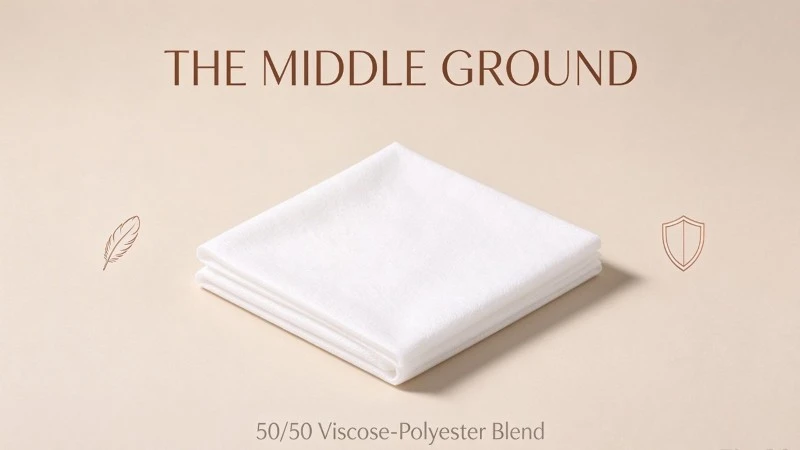
The Middle Ground
Cannot decide? Try a 50/50 blend of viscose and polyester:
- Medium softness
- Good strength
- Decent absorbency (8-12 times weight)
- GSM: 50-80
- Works for many jobs
This is the most popular choice for gyms, general salon use, and multi-purpose cleaning.
Final Tips
- Order samples first - Test before buying in bulk
- Try with real tasks - Use them how you will actually use them
- Ask your staff - Get feedback from people who will use them
- Start with your main need - Pick based on your top priority
The Bottom Line
There is no "best" disposable towel. The right choice depends on what you need.
Choose soft towels if:
- You need them for facial care
- Skin contact is important
- Comfort matters most
- You serve clients who expect luxury
Choose durable towels if:
- You do industrial cleaning
- You need wet strength
- You clean with chemicals
- You want to reuse towels several times
Most businesses keep both types on hand. Use soft for client care. Use durable for cleaning and maintenance.
Match the material to the job. Your clients will be happy. Your staff will work better. Your budget will thank you.


